
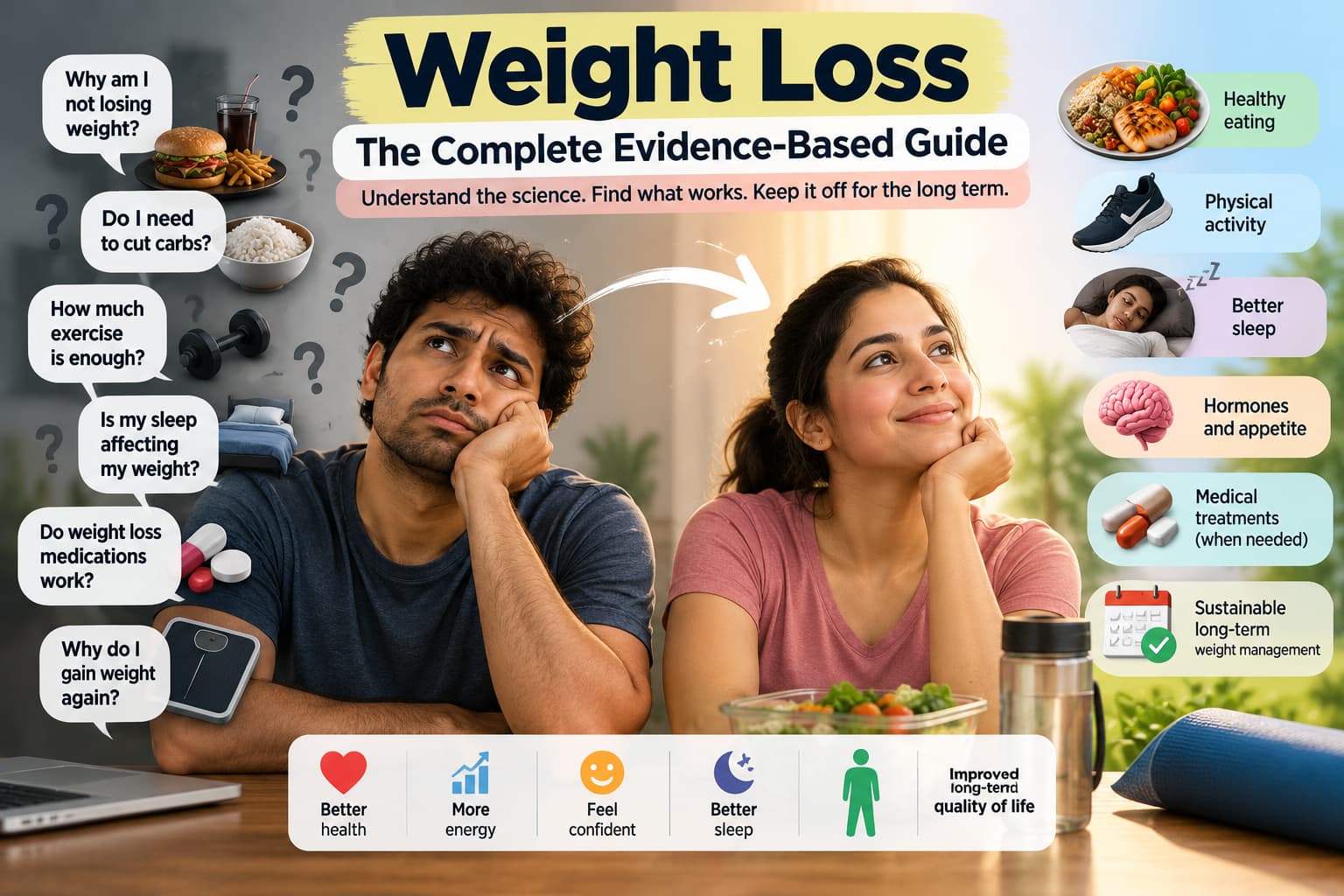
Losing weight is often presented as a simple equation: eat less, exercise more, and the pounds will disappear. In reality, weight management is influenced by nutrition, physical activity, appetite, sleep, behavior, genetics, metabolism, and the environment around us. This evidence-based guide explains how weight loss actually works, what dietary and lifestyle strategies can help, why weight regain happens, and when medical treatments may be appropriate. Whether you are starting your weight-loss journey or struggling to maintain your progress, this guide will help you understand the science behind sustainable weight management.
What Is Weight Loss—and Why Does Body Weight Increase?
When people say they want to “lose weight,” they usually mean they want to reduce excess body fat. But body weight is more than just fat. It includes water, muscle, bone, organs, glycogen, and the contents of the digestive tract. Therefore, a change on the weighing scale does not always represent an equal change in body fat.
Body weight increases when, over time, the body stores more energy than it uses. However, this does not mean that weight gain is simply a matter of “eating too much” or lacking willpower. Body weight is influenced by a complex interaction between food intake, physical activity, appetite, genetics, sleep, medications, environment, and metabolic processes.
BMI (body mass index) is commonly used to screen for overweight and obesity by relating weight to height. However, BMI does not directly measure body fat or show where fat is stored. Waist circumference and other measures of adiposity can provide additional information, particularly because excess abdominal fat is associated with increased metabolic risk.
This is especially relevant for Indian and other South Asian populations, who can develop metabolic complications at lower BMI levels than many other populations.
The goal of healthy weight management, therefore, is not simply to make the number on the scale smaller. It is to reduce excess body fat, improve metabolic and overall health, and maintain those improvements over the long term.
In short: weight gain is influenced by biology, behavior, and environment, while successful weight loss involves more than simply eating less.
How Weight Loss Actually Works: Calories, Energy Balance and Body-Fat Loss
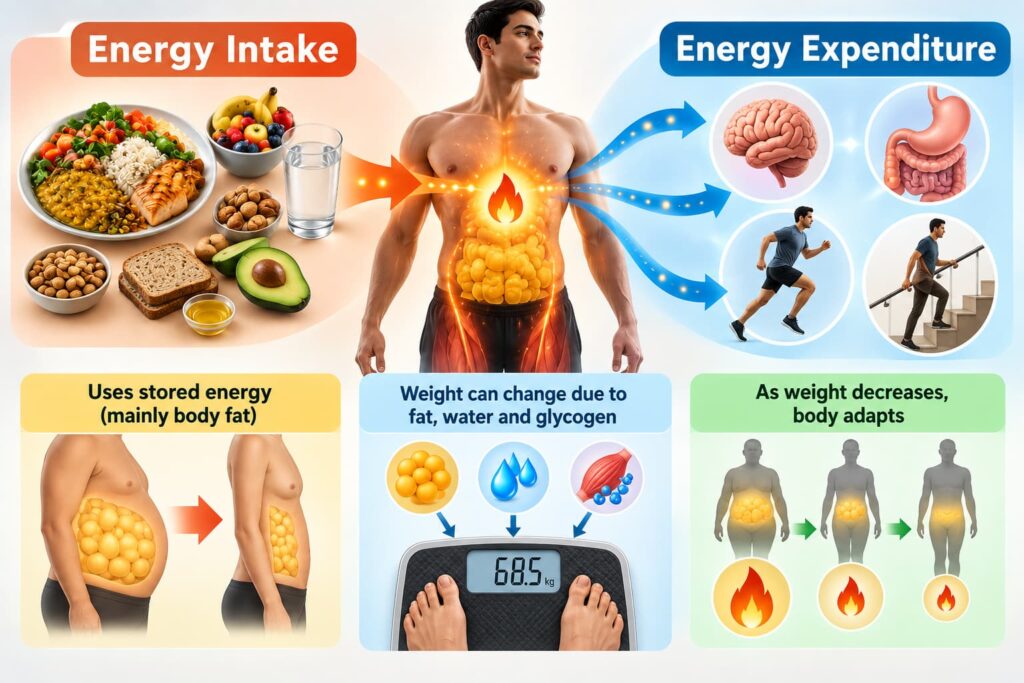
At its simplest level, weight loss occurs when the body uses more energy than it receives from food and drinks over time. This is known as an energy deficit.
Your body uses energy continuously to keep you alive and functioning. A large portion is used for basic processes such as breathing, maintaining body temperature, and supporting the heart, brain, and other organs. You also use energy to digest food and perform physical activity, including both planned exercise and everyday movement.
When energy intake is consistently lower than energy expenditure, the body must draw on stored energy. Some of this energy comes from stored body fat, although changes in body water, glycogen, and lean tissue can also contribute to changes in body weight.
This is why the number on the weighing scale can change considerably from day to day. A sudden drop in weight does not necessarily mean a sudden loss of body fat.
Weight loss also does not continue at exactly the same rate forever. As body weight decreases, the body generally requires less energy to maintain itself. Changes in physical activity, appetite, and energy expenditure can also occur during weight loss. As a result, the calorie deficit that initially produced weight loss may become smaller over time.
This does not mean that the principle of energy balance stops applying. Rather, the human body is a dynamic system, and energy intake and expenditure can change in response to weight loss.
Understanding this helps explain why sustainable weight loss is usually a gradual process rather than a perfectly predictable calculation.
In short: a sustained energy deficit is necessary for weight loss, but the human body continually adapts, making long-term weight management more complex than simply counting calories.
What Should You Eat to Lose Weight?
There is no single diet that everyone must follow to lose weight. The most effective eating pattern is one that can create a sustainable energy deficit while providing adequate nutrition and fitting your food preferences, culture, lifestyle, and health needs.
Protein-rich foods can help support muscle mass during weight loss and may improve fullness. Good sources include eggs, dairy products, fish, lean meat, pulses, beans, soy, and other protein-rich foods. Fiber-rich foods, including vegetables, fruits, whole grains, legumes, nuts, and seeds, can also contribute to fullness and overall diet quality.
Different dietary patterns—including lower-carbohydrate, lower-fat, Mediterranean-style, and other balanced approaches—can produce weight loss. Evidence does not consistently show that one diet is universally superior for everyone. What matters is whether the eating pattern can be followed consistently and provides an appropriate energy intake.
Food quality also matters. A diet based mainly on minimally processed foods can make it easier to control energy intake while providing essential nutrients. At the same time, completely banning particular foods is usually unnecessary. Portion size and overall dietary pattern matter more than labeling individual foods as simply “good” or “bad.”
For Indian diets, practical weight management may involve adjusting portions of calorie-dense foods while maintaining familiar foods such as dal, vegetables, whole grains, curd, eggs, fish, or other protein sources.
The goal is not to find the “perfect diet.” It is to develop an eating pattern that you can follow consistently, enjoy, and maintain over the long term.
In short: successful weight-loss diets can differ, but they generally need to provide an appropriate energy deficit, adequate nutrition, and long-term adherence.
Exercise for Weight Loss: How Much Do You Actually Need?
Exercise can support weight loss by increasing energy expenditure, but its benefits go beyond burning calories. Regular physical activity can improve cardiovascular fitness, insulin sensitivity, muscle strength, mood, and overall health.
Aerobic activities such as brisk walking, cycling, swimming, and jogging can increase energy expenditure. Resistance training is also important during weight loss because it can help preserve muscle mass while body weight decreases.
You do not need to begin with intense workouts. For many people, increasing everyday movement—such as walking more, taking the stairs, or reducing prolonged sitting—is a practical starting point. The best activity is one that is safe, enjoyable, and sustainable.
Exercise alone may produce less weight loss than people expect because the body can compensate through changes in appetite, activity, and energy expenditure. However, combining regular physical activity with an appropriate eating pattern can support both weight loss and long-term weight maintenance.
In short: exercise is not simply a tool for burning calories. It is an important part of maintaining muscle, improving health, and supporting sustainable weight management.
Sleep, Stress, Hunger and Behavior: Why Losing Weight Isn’t Just About Food
Weight management is influenced by more than diet and exercise. Sleep, stress, appetite, habits, and the food environment can all affect eating behavior and body weight.
Poor or insufficient sleep is associated with a higher risk of overweight and obesity and may influence appetite, food choices, and energy levels. Stress can also affect eating behavior, although its effects vary between individuals.
Hunger is particularly important during weight loss. As body weight decreases, biological adaptations can increase appetite and make maintaining a lower calorie intake more difficult. This is one reason long-term weight management cannot depend on willpower alone.
Behavioral strategies such as self-monitoring, meal planning, setting realistic goals, identifying overeating triggers, and building consistent routines can help people maintain healthier habits.
The goal is not to follow a perfect routine. It is to create habits and an environment that make healthy choices easier to maintain.
In short: sustainable weight loss involves more than calories. Sleep, stress, hunger, habits, and behavior can all influence how successfully someone loses and maintains weight.
Why Do People Regain Weight After Losing It?
Losing weight is only one part of weight management. Maintaining that weight loss can be challenging, and some degree of weight regain is common.
One reason is that the body adapts to weight loss. As body weight decreases, the body generally requires less energy to function. Changes in appetite and energy expenditure can also occur, making it harder to maintain the same calorie deficit that initially produced weight loss.
Hunger may increase during and after weight loss as the body responds to the reduction in stored energy. At the same time, a lighter body requires fewer calories for movement and basic functions. These changes can make returning to previous eating patterns particularly easy.
The environment also matters. Easy access to highly palatable, calorie-dense foods, sedentary lifestyles, stress, and established eating habits can make long-term maintenance difficult.
However, weight regain should not automatically be interpreted as a failure of willpower. Biological, behavioral, and environmental factors can all contribute.
Understanding these mechanisms is important because successful weight management requires a long-term strategy rather than a temporary diet.
In short: weight regain can occur because the body and environment continue to challenge weight maintenance after the initial weight-loss phase.
How to Keep Weight Off: The Science of Long-Term Weight Maintenance
Weight loss should not be viewed as a short-term project. Maintaining the weight you lose requires continuing many of the behaviors that helped you lose it.
A sustainable eating pattern is more useful than a temporary restrictive diet. Regular physical activity can also help with weight maintenance while providing benefits for cardiovascular and metabolic health.
Monitoring can be useful as well. Regularly checking body weight, eating patterns, or physical activity can help identify gradual changes before substantial weight regain occurs. If weight begins to increase, adjusting habits early may be easier than waiting until a large amount of weight has returned.
Long-term support can also make a difference. Depending on the individual, this may include a healthcare professional, dietitian, structured weight-management program, or behavioral support.
Importantly, maintaining weight does not require perfection. Occasional changes in eating or activity are normal. The goal is to return to healthy routines rather than abandoning them after a setback.
In short: successful weight maintenance is an ongoing process built around sustainable eating, regular physical activity, self-monitoring, and appropriate long-term support.
Weight-Loss Medications: When Lifestyle Changes Aren’t Enough
For some people with overweight or obesity, lifestyle changes alone may not produce sufficient or sustainable weight loss. In such cases, anti-obesity medications may be considered as part of comprehensive medical treatment.
These medicines work through different mechanisms. Some affect appetite and fullness, while newer medications such as semaglutide and tirzepatide act on hormones involved in appetite and energy regulation and can produce substantial weight loss in eligible adults.
Medication is not a replacement for healthy eating or physical activity. It is generally used alongside lifestyle interventions and should be selected according to factors such as BMI, obesity-related complications, other medications, medical history, potential adverse effects, cost, and patient preferences.
Weight management medications can also have side effects, and their benefits may diminish after treatment is stopped. Therefore, obesity pharmacotherapy should be viewed as part of long-term medical management, rather than a quick solution.
In short: anti-obesity medications can be an effective treatment option for some people, but they should be used under appropriate medical supervision and as part of a broader weight-management plan.
When Should You Consider Professional Weight-Loss Treatment or Surgery?
Not everyone needs medical treatment to lose weight, but professional help can be valuable when obesity is affecting health, lifestyle changes have been difficult to sustain, or significant weight-related complications are present.
A healthcare professional can assess factors such as BMI, waist circumference, blood pressure, blood glucose, medications, sleep, eating patterns, and obesity-related conditions before developing an individualized treatment plan.
Depending on the situation, treatment may include nutrition and behavioral counseling, structured weight-management programs, anti-obesity medications, or metabolic and bariatric surgery.
Surgery is generally considered for people with obesity who meet established clinical criteria, particularly when obesity is associated with significant health complications. Modern guidelines recognize metabolic surgery as an effective treatment option for appropriately selected patients.
Seeking professional help is not a sign that lifestyle changes have “failed.” Obesity is a chronic disease, and some people require more intensive treatment to achieve and maintain clinically meaningful weight loss.
In short: when excess weight is significantly affecting health or lifestyle efforts are insufficient, professional assessment can help determine whether additional treatment is appropriate.
Resources
Obesity Energetics: Body Weight Regulation and the Effects of Diet Composition – PMC
About the author
It’s me Mohammad Junaid Rain an MBBS student at GMC Nagpur, passionate about making evidence-based medical information accessible to every Indian. “medstuffs.com” is dedicated to clear, disease education for patients and caregivers.
Disclaimer: This article is for educational purposes only and does not substitute professional medical advice. Please consult your doctor for diagnosis and treatment.