

A diagnosis of Type 1 Diabetes (T1D) can feel overwhelming, changing everything from how you approach a simple meal to how you plan your day. It is a lifelong balancing act that impacts both physical health and emotional well-being. If you have ever felt the heavy burden of managing glucose levels, counting carbohydrates, and navigating complex medical tech all on your own, here is a comforting truth: you don’t have to. Managing this condition successfully is never a solo project. In fact, Building Your Complete Type 1 Diabetes Care Team is the single most important step you can take toward reclaiming control and thriving.
A truly effective care strategy extends far beyond standard clinic visits. It requires a dedicated, multidisciplinary ecosystem tailored to your unique lifestyle. From the precise medical strategy of endocrinologists to the daily practical blueprints provided by dietitians and tech experts, each member plays a vital role. Furthermore, integrating mental health support and tapping into powerful community safety nets ensures you are supported holistically. Let’s explore the essential specialists, frontline educators, and invaluable resources that come together to form your ultimate diabetes support village.
Your Core Diabetes Care Team: Endocrinologists, Diabetologists & Pediatricians
When you are managing diabetes, it truly takes a village. While your primary doctor is essential, three core medical specialists bring the advanced expertise needed to tailor your treatment.
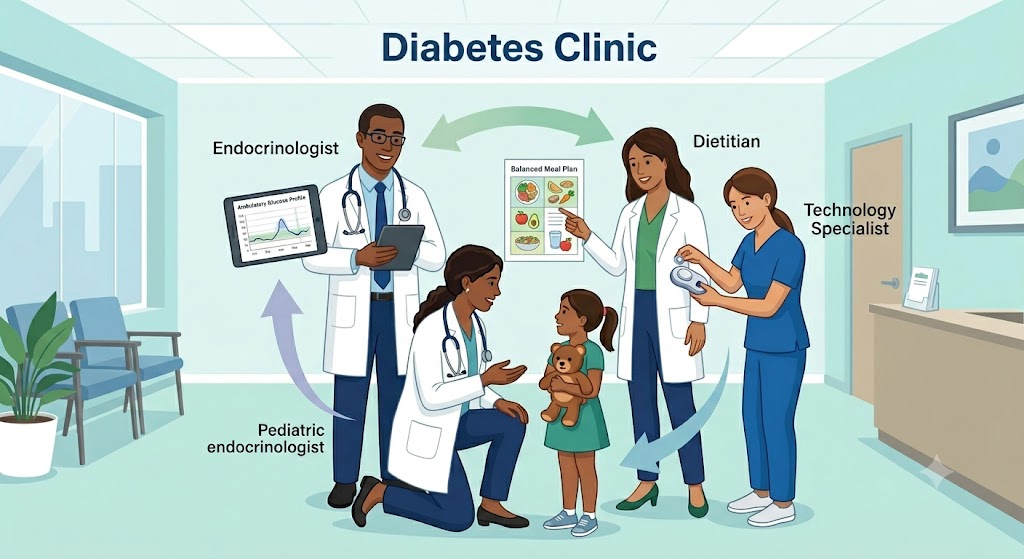
1. Endocrinologists & Pediatric Endocrinologists
Endocrinologists are the ultimate hormone experts. Because diabetes is a hormone-related condition (involving insulin), they deep-dive into complex cases. For children, pediatric endocrinologists are crucial; they don’t just track blood sugar, they monitor how diabetes impacts growth and puberty.
The Challenge: In regions like India, a shortage of these specialists and pediatric dietitians creates a major hurdle for families seeking specialized care.
2. Diabetologists
While endocrinologists handle all hormones, diabetologists focus exclusively on diabetes. They look at the whole person, often leading community support groups—like the Friends Forever initiative—alongside psychologists and educators to support your mental and emotional well-being.
The Reality of Modern Care
Even top experts face daily hurdles. With advanced tech like Continuous Glucose Monitors (CGMs), specialists often struggle with:
- A lack of tech support staff to link patient devices to clinic systems.
- Limited time during a brief appointment to analyze complex glucose reports.
Why a Team Approach Wins
No single doctor can manage diabetes alone. The best outcomes happen when these specialists collaborate within a multidisciplinary team—including pharmacists, dietitians, and mental health professionals—to bridge the gap between clinical science and your daily life.
Building Your Complete Type 1 Diabetes Care Team: The Role of Educators & Dietitians
While doctors prescribe your medication, diabetes educators and dietitians give you the daily blueprint to live your life. They are the foundational pillars of Diabetes Self-Management Education and Support (DSMES).
Dietitians: Moving Beyond Restrictive Diets
The days of boring, restrictive “diabetic diets” are over. Today, registered dietitians use Medical Nutrition Therapy (MNT) to create a flexible plan that fits your life.
- Tailored Education: They teach you practical skills like carbohydrate counting, reading glycemic index cues, and managing portion sizes.
- Cultural Adaptability: They design meal plans that honor your traditional foods while syncing your carbohydrate intake perfectly with your insulin dosing (like basal-bolus regimens or insulin pumps).
Diabetes Educators: Your Tech Guides
As diabetes technology evolves, educators have become essential tech translators, helping you master Continuous Glucose Monitors (CGMs) and digital health apps.
- Patient Empowerment: They teach you how to apply sensors, navigate smartphone apps, and troubleshoot tech glitches.
- Data Interpretation: They analyze your Ambulatory Glucose Profile (AGP) reports, breaking down complex charts into simple lifestyle adjustments.
- Physician Support: By managing this data-heavy tech, they take the pressure off your doctor, ensuring your clinic visits focus on high-level care.
The Team Approach and the Access Gap
True care requires a village. Holistic support groups—like the Friends Forever initiative—succeed because they pair a diabetologist with a dietitian, psychologist, and educator to support a child’s emotional and physical well-being.
Unfortunately, access to certified dietitians and educators remains a major challenge, especially in India. Expanding structured certification programs in digital health and nutrition is vital to ensuring every family gets the specialized support they deserve.
Building Your Complete Type 1 Diabetes Care Team: Prioritizing Mental Health
Managing diabetes isn’t just about insulin and numbers—it is equally about your emotional well-being. When Building Your Complete Type 1 Diabetes Care Team, including mental health support is vital for preventing burnout.
The Psychological Burden of Diabetes
Living with diabetes brings unique emotional and social hurdles. Due to cultural stigmas and misconceptions, many individuals face isolation, anxiety, depression, and “diabetes burnout.”
Adolescents are especially vulnerable, facing a higher risk of developing disordered eating patterns. This is why modern clinical guidelines urge regular mental health screenings and multidisciplinary support.
Strategies to Protect Your Mind
Your care team can help you implement powerful stress-management tools:
- Self-Compassion & Mindfulness: Giving yourself grace and practicing non-judgmental awareness to reduce daily anxiety.
- Peer Support: Group initiatives like the Friends Forever program use psychologist-led sessions to replace shame and isolation with shared, lived experiences.
A Family-Centered Approach
A type 1 diabetes diagnosis impacts the entire household. A caregiver’s stress directly affects how well a child’s diabetes is managed. By integrating psychosocial care for the whole family and moving away from restrictive diets toward flexible, personalized Medical Nutrition Therapy (MNT), we protect both the mental health and physical success of the patient.
Building Your Complete Type 1 Diabetes Care Team: Integrating Tech Experts
The rapid rise of Continuous Glucose Monitoring (CGM) and insulin pumps has revolutionized diabetes management. To handle these advanced systems, a dedicated technology support team has become an indispensable asset to the modern clinic.
When Building Your Complete Type 1 Diabetes Care Team, including tech-focused specialists helps you master these digital health tools without overwhelming your daily life.
Tech Support Team Focus Areas:
- Device Setup & Education: Alongside diabetes educators, tech staff teach you how to apply sensors, navigate smartphone apps, and troubleshoot error messages. They break down barriers like low digital literacy using simple videos and multilingual guides.
- Data Integration: One of the biggest hurdles for doctors is the time needed to link patient accounts to clinic portals. Tech teams manage these IT hassles, syncing your device via Practice IDs so your doctor instantly receives your Ambulatory Glucose Profile (AGP) reports.
- Advanced Systems & Telemedicine: For those using closed-loop “artificial pancreas” systems, this team tracks cloud-based data to safely flag glucose patterns. They also integrate your data with telemedicine platforms for seamless remote monitoring.
Ultimately, by taking over the heavy lifting of data centralization and device troubleshooting, these tech experts free up your endocrinologist. This allows your physician to focus entirely on critical clinical decisions—like improving your Time-in-Range (TIR) and preventing hypoglycemia—leading to a much higher quality of personalized care.
Building Your Complete Type 1 Diabetes Care Team: Accessing Community & Financial Support
Managing diabetes extends far beyond the clinic walls. Affordability and accessibility require a strong socioeconomic safety net powered by government initiatives, NGOs, insurance, and peer networks.
Government Programs & The Financial Burden
In low-resource settings, diabetes management can consume nearly one-third of a family’s income. In India, key initiatives help ease this financial strain:
- The ’75 by 25′ Initiative: A roadmap by the Ministry of Health and Family Welfare (MoHFW) aims to place 75 million people with diabetes and hypertension under protocol-based care.
- The NPCDCS Programme: Focuses on screening adults over 30 via Ayushman Bharat centres, though a structured national policy specifically for juvenile Type 1 Diabetes (T1D) remains a critical gap.
- Subsidized Care: The PMBJP initiative offers free or highly subsidized essential medicines like insulin, while PMJAY provides inpatient hospital coverage for over 100 million low-income families.
The Power of NGOs and Global Alliances
When public health infrastructure faces strain, Non-Governmental Organizations (NGOs) step in. Global groups like the World Diabetes Foundation (WDF) partner with the government to upgrade rural supply chains and train healthcare staff. At the grassroots level, organizations like Beyond Type 1 fund local Indian foundations (such as Nityaasha and SAMATVAM) to supply free medical care and life-skills training to underprivileged children with T1D.
Patient Communities & Frontline Heroes
A connected community is the best weapon against the social stigma of diabetes.
- Peer Support: Group initiatives like Friends Forever offer families a safe space to share lived experiences, replacing isolation with solidarity.
- Frontline Workers: India’s Accredited Social Health Activists (ASHAs) act as the vital human bridge—navigating deep systemic challenges to connect rural families directly with essential screening, education, and emotional support.
Reference
https://pubmed.ncbi.nlm.nih.gov/41391088
https://pmc.ncbi.nlm.nih.gov/articles/PMC12431490
https://journals.sagepub.com/doi/10.1177/30502071241293567
https://link.springer.com/article/10.1007/s13410-025-01543-5
https://pmc.ncbi.nlm.nih.gov/articles/PMC12642021
https://www.thelancet.com/journals/landia/article/PIIS2213-8587(25)00397-3/abstract
https://www.breakthrought1d.org/t1d-resources/mental-health
https://link.springer.com/article/10.1007/s41745-022-00348-3
https://www.umassmed.edu/dcoe/news/diabetes-technology-update
About the author
It’s me Mohammad Junaid Rain an MBBS student at GMC Nagpur, passionate about making evidence-based medical information accessible to every Indian. “medstuffs.com” is dedicated to clear, disease education for patients and caregivers.
Disclaimer: This article is for educational purposes only and does not substitute professional medical advice. Please consult your doctor for diagnosis and treatment.
1 thought on “Building Your Complete Type 1 Diabetes Care Team in India”