
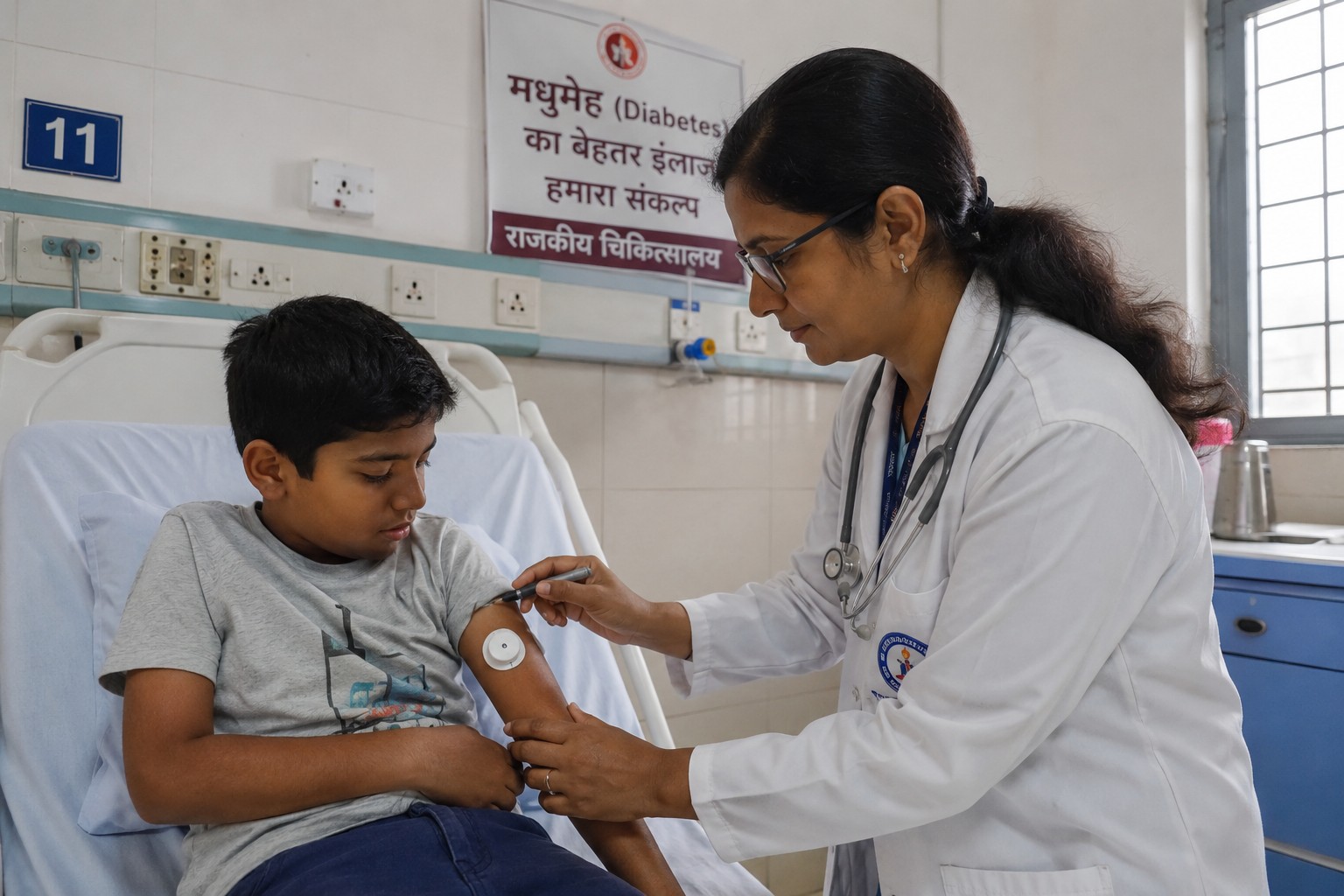
For a child or young adult living with Type 1 Diabetes (T1D), insulin isn’t just a prescription—it is the very essence of survival. Yet, for thousands of families across India, the crushing financial burden of daily insulin, test strips, and medical care feels like an impossible hurdle. Does the fear of the next medical bill ever keep you awake at night?
You are not alone, and more importantly, you do not have to walk this path by yourself. The tide is turning. With the launch of India’s transformative National Framework for Childhood Diabetes, the healthcare system is finally bridging the gap, making high-quality, life-saving care accessible to those who need it most. From navigating Government Hospitals and Free Treatment for Type 1 Diabetes to tapping into national schemes like Ayushman Bharat, there is a structured, official pathway to secure your supplies.
In this guide, we break down exactly where to go, which schemes apply to your family, and how to work with your local district hospital to ensure your child never faces a shortage. Stop worrying about the costs and start securing their future today—let’s walk through the steps to get the care you deserve.
Understanding Type 1 Diabetes in India — Why Free Treatment Is Non-Negotiable
Type 1 Diabetes (T1D) is an autoimmune condition where the body stops producing insulin. For those living with it, insulin is not a medication; it is life support. India currently holds the world’s highest population of children and youth with T1D. For these families, consistent access to care isn’t a policy preference—it is a non-negotiable requirement for survival.
The Hidden Financial Crisis
Managing T1D is a relentless, high-stakes commitment. With daily insulin requirements and multiple blood glucose checks, the monthly cost of supplies often ranges from ₹3,000 to ₹4,000. In a country where out-of-pocket medical expenses already strain household budgets, these costs can consume up to 50% of a family’s income.
When families cannot afford high-quality care, they are forced to choose less effective alternatives, leading to dangerous glycemic swings. This isn’t just a financial burden; it is a direct threat to a child’s long-term health.
Why Free Care Saves Lives
Dependence on private charities, while noble, is not a permanent fix. Data from localized programs, like those in Nagpur and Tamil Nadu, reveals a clear truth: when out-of-pocket costs are removed, health outcomes improve dramatically. One pilot program saw a 90% reduction in Diabetic Ketoacidosis (DKA)—a life-threatening emergency—simply by providing free insulin and monitoring supplies.
Bridging the Gap: Government Initiatives
Recognizing this, India has mobilized several key initiatives to ease the burden:
- Free Drugs Service Initiative (FDSI): Part of the National Health Mission (NHM), this supports states in providing essential medicines, including insulin, for free at public facilities.
- PMBJP (Janaushadhi): Makes high-quality generic insulin available at a fraction of market prices.
- Institutional Efforts: Major centers like AIIMS Delhi have launched dedicated free insulin distribution services, even providing cold-chain support for safe transport.
For a child with T1D, insulin is as essential as the air they breathe. Moving toward fully integrated, government-supported care is the only way to ensure our youth don’t just survive, but thrive.
Do you or a loved one struggle to access affordable insulin or diabetes supplies in your area? Then read this whole article to help them.
Where to Find Free Type 1 Diabetes Care in India
Navigating the healthcare system for Type 1 Diabetes (T1D) can be overwhelming. Here is a breakdown of government-supported facilities and initiatives where patients can access life-saving treatment.
AIIMS and National Centers of Excellence
The All India Institute of Medical Sciences (AIIMS), New Delhi, leads the way with a dedicated, complimentary insulin distribution service for economically disadvantaged patients. Insulin is available via dedicated counters at Amrit Pharmacy. To ensure safety, staff provide guidance on cold-chain storage and, for those traveling long distances, even supply frozen ice packs. Initially, patients receive a one-month supply, with efforts underway to extend this duration.
Civil Hospitals and the NHM Framework
Most state-funded Civil Hospitals and AIIMS-affiliated centers are mandated to provide essential diabetes care. Under the National Health Mission’s (NHM) Free Drugs Service Initiative, states receive financial backing to ensure insulin is available at no cost. Additionally, for severe, life-threatening diabetes complications, hospitalization costs for eligible low-income families are covered under the Ayushman Bharat (PM-JAY) scheme.
State-Led Success Models
- Tamil Nadu: Government Medical College Hospitals have successfully piloted a model that provides children with free analog insulins, glucometers, test strips, and 24/7 support. This partnership-based approach has significantly reduced emergency admissions for DKA.
- Karnataka: Institutions like the Indira Gandhi Institute for Child Health (IGICH) and KIER (Bengaluru) provide free insulin for admitted patients. While many outpatients currently rely on NGO sponsorships, doctors are actively lobbying the state government to make permanent, free insulin supplies a standard for all pediatric patients.
NGO and International Partnerships
Global initiatives, such as Life for a Child and Direct Relief, distribute thousands of insulin cartridges for free through 15 healthcare facilities across 12 cities, including locations in Nagpur, Pune, Bangalore, and Ahmedabad. These programs fill critical gaps where state funding is still maturing.
Are you struggling to locate a center near you? Always check with the Medical Social Worker (MSW) desk at your nearest government district hospital—they are your best point of contact for navigating available local support.
Government Schemes for Free Treatment of Type 1 Diabetes in India
Accessing life-saving insulin and diagnostic care for Type 1 Diabetes (T1D) is now a central focus of India’s public health policy. Recent government initiatives have moved beyond general support to create structured frameworks for the lifelong management of T1D, particularly for children and youth.
National Framework for Free Lifetime Care
In a major shift, the Ministry of Health has launched a comprehensive National Framework for Childhood Diabetes. This policy integrates T1D management directly into the public health system, aiming to provide universal, free-of-cost support—including lifelong insulin, glucometers, and test strips—to all children up to 18 years of age. This connects community-level screening (using the “4Ts” diagnostic framework) to district hospitals and medical colleges for advanced care.
Key Government Schemes & Access Points
Beyond the national childhood framework, several established schemes provide critical coverage for T1D management:
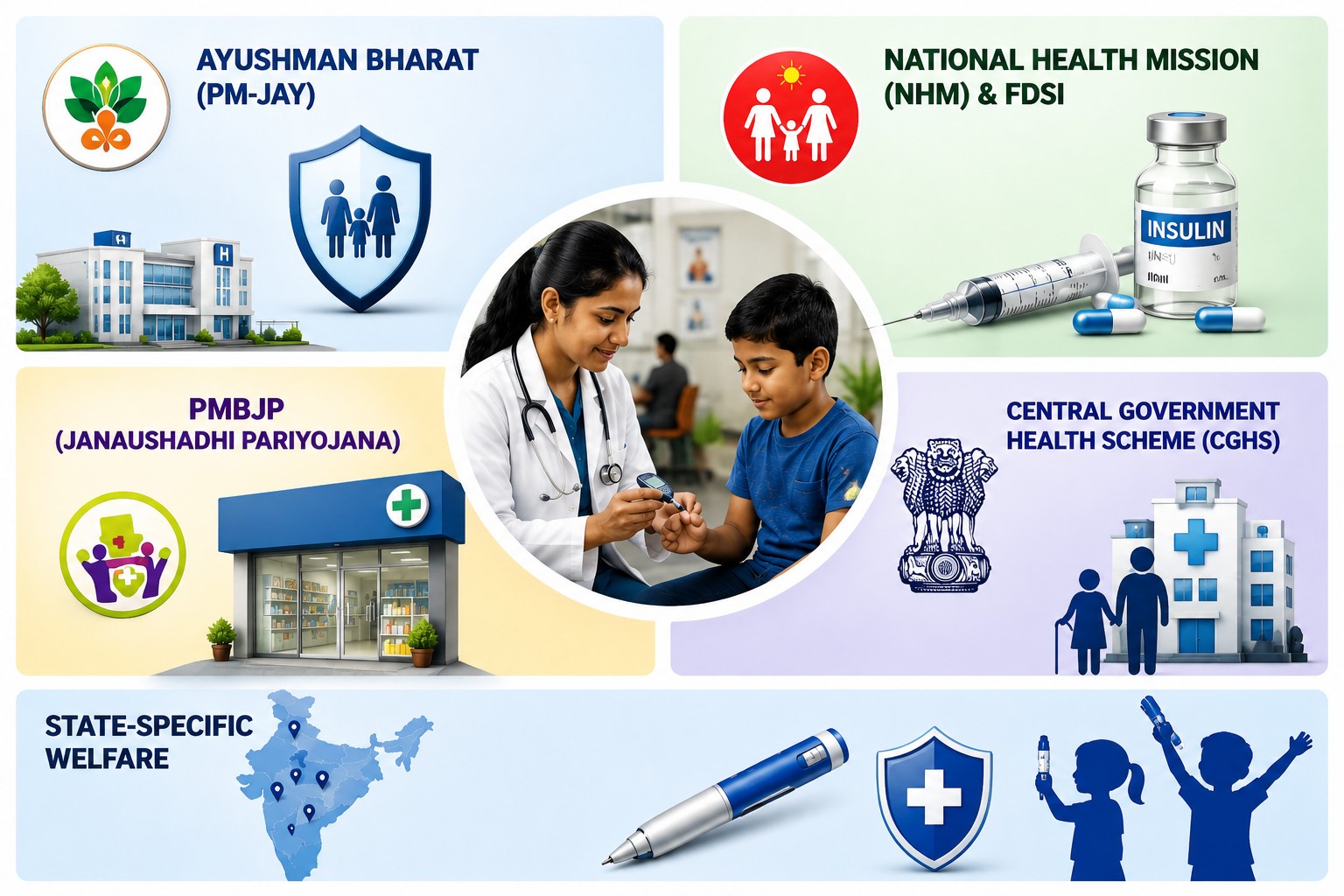
- Ayushman Bharat (PM-JAY): This world-leading scheme provides cashless, paperless coverage of up to ₹5 lakh per family annually for secondary and tertiary hospitalizations. It is vital for managing severe T1D complications like Diabetic Ketoacidosis (DKA).
- National Health Mission (NHM) & FDSI: The Free Drugs Service Initiative supports states in ensuring that essential medicines, specifically including insulin, are stocked and provided free of charge at public facilities.
- PMBJP (Janaushadhi Pariyojana): This initiative focuses on affordability, making quality generic insulin and related supplies accessible at highly subsidized prices through dedicated stores across the country.
- Central Government Health Scheme (CGHS): Specifically for central government employees and pensioners, CGHS offers comprehensive outpatient consultations, diagnostic tests, and free supplies of insulin through designated wellness centers.
- State-Specific Welfare: Many states now offer additional layers of protection. For instance, recent budget announcements in states like Karnataka have mandated free insulin pens for all registered T1D patients under 18, ensuring that treatment is not dictated by a family’s financial status.
How to Access These Services
To benefit from these programs, patients should visit their nearest District Hospital or Medical College and inquire at the Medical Social Worker (MSW) desk. They are the primary link for registering under these schemes and securing uninterrupted access to care.
Do you need help finding the nearest empanelled hospital or center for these schemes? Please reach out to your local District Health Office for the most current list of participating facilities.
State-Wise Government Hospitals and Free Treatment for Type 1 Diabetes
Accessing high-quality care is now more standardized than ever. With the launch of India’s National Framework for Childhood Diabetes (May 2026), the government has integrated Type 1 Diabetes (T1D) care into the public health system. This means that besides top-tier tertiary hospitals, your District Hospital is now a primary hub for free screening, diagnostic services, lifelong insulin therapy, and monitoring supplies.
Key Tertiary Care Centers for T1D
While local district hospitals are your first point of contact, major national and state-run institutions offer advanced pediatric endocrinology and specialized support:
- Delhi & NCR: AIIMS, New Delhi, remains the gold standard, offering direct, free insulin distribution via specialized pharmacy counters, complete with cold-chain transport support (ice packs) for long-distance patients. Safdarjung and RML Hospital also provide expert, centrally-funded care.
- Karnataka: Indira Gandhi Institute for Child Health (IGICH) and KIER in Bengaluru are primary centers for pediatric T1D. They are now central to the state’s rollout of the new national childhood diabetes guidelines.
- Tamil Nadu: Rajiv Gandhi Government General Hospital and Madras Medical College lead in complex cases, leveraging the state’s successful history of integrating NGO/industry partnerships into public care models.
- Maharashtra: KEM Hospital and Sion Hospital in Mumbai provide essential, high-volume endocrinology services, bridging the gap for the city’s dense urban population.
- Chandigarh & North India: PGIMER is the premier center for advanced research and endocrinology in the region.
- Uttar Pradesh & South: SGPGIMS (Lucknow) and JIPMER (Puducherry) serve as critical tertiary referral hubs for advanced, affordable diabetes management.
How to Navigate Your Regional Access
If you are not near one of these major hubs, follow these steps to secure care:
- Visit the MSW Desk: Every District Hospital has a Medical Social Worker (MSW) desk. They are trained to guide you through the new national framework and help you register for free insulin and supplies.
- Use the 4Ts Awareness Tool: If you suspect symptoms, use the 4Ts (Toilet, Thirsty, Tired, Thinner) to get an immediate referral.
- Ayushman Bharat (PM-JAY): Always carry your card for cashless hospitalization related to diabetes complications at any empanelled facility in your district.
Are you having trouble accessing these services in your specific district? Please visit your local District Health Office; they are now mandated to provide the updated National Framework guidance for childhood diabetes.
Step-by-Step: Accessing Government Hospitals and Free Treatment for Type 1 Diabetes
Navigating India’s public health system for Type 1 Diabetes (T1D) care can seem daunting, but it is now structured to support you. Follow this guide to secure your supplies.
1. Identify Your Access Route
- CGHS Beneficiaries: If you are a central government employee or pensioner, use your CGHS card for cashless services and free medication at any CGHS Wellness Centre.
- Ayushman Bharat (PM-JAY): If eligible, use your card at empanelled hospitals for cashless secondary/tertiary care if complications arise.
- General Public: Under the National Health Mission’s Free Drugs Service Initiative (FDSI), all public health facilities are mandated to provide insulin free of cost to those in need.
2. The Clinical Consultation
Visit your nearest Government District Hospital or Medical College. Register at the OPD and consult an endocrinologist or general physician. Pro-Tip: Explicitly request the doctor to note “Type 1 Diabetes” and “Insulin requirement” on your OPD card and prescription to ensure you qualify for the free dispensary stock.
3. Collection & Cold-Chain Management
Take your stamped prescription to the hospital’s pharmacy or designated “Amrit” counter.
- Important: Insulin is temperature-sensitive (2°C–8°C). If you are traveling, ask the pharmacy for guidance on storage. Premier institutions like AIIMS, New Delhi, provide frozen ice packs and written transport instructions. If your local center doesn’t provide these, bring a small insulated medical pouch.
4. Planning Follow-Ups
Most government centers issue a one-month supply of insulin initially. Always mark your calendar for your next OPD visit at least three days before your supply runs out to avoid gaps in therapy.
Struggling to find the right counter? Ask for the Medical Social Worker (MSW) desk at your district hospital. They are the designated authorities to assist patients in navigating Government Hospitals and Free Treatment for Type 1 Diabetes and will ensure you are registered for consistent supply. Have you checked your local district hospital for the latest free insulin stock availability yet?
Reference
https://www.t1international.com/India
https://www.impactguru.com/info/government-hospitals-in-india
https://www.pib.gov.in/PressReleaseIframePage.aspx?PRID=1882179®=48&lang=2
https://smcinsurance.com/health-insurance/articles/ayushman-bharat-hospital-list
https://www.healthcareradius.in/government-policy/diabetes-hypertension
https://nhsrcindia.org/free-drugs-service-initiative-0
https://doaj.org/article/8a6032e20bd647c2b728a8ab3b1c0496
https://www.apollo247.com/blog/article/public-health-initiatives-aiding-diabetes-outcomes
https://app.dimensions.ai/details/publication/pub.1092177586
About the author
It’s me Mohammad Junaid Rain an MBBS student at GMC Nagpur, passionate about making evidence-based medical information accessible to every Indian. “medstuffs.com” is dedicated to clear, disease education for patients and caregivers.
Disclaimer: This article is for educational purposes only and does not substitute professional medical advice. Please consult your doctor for diagnosis and treatment.