
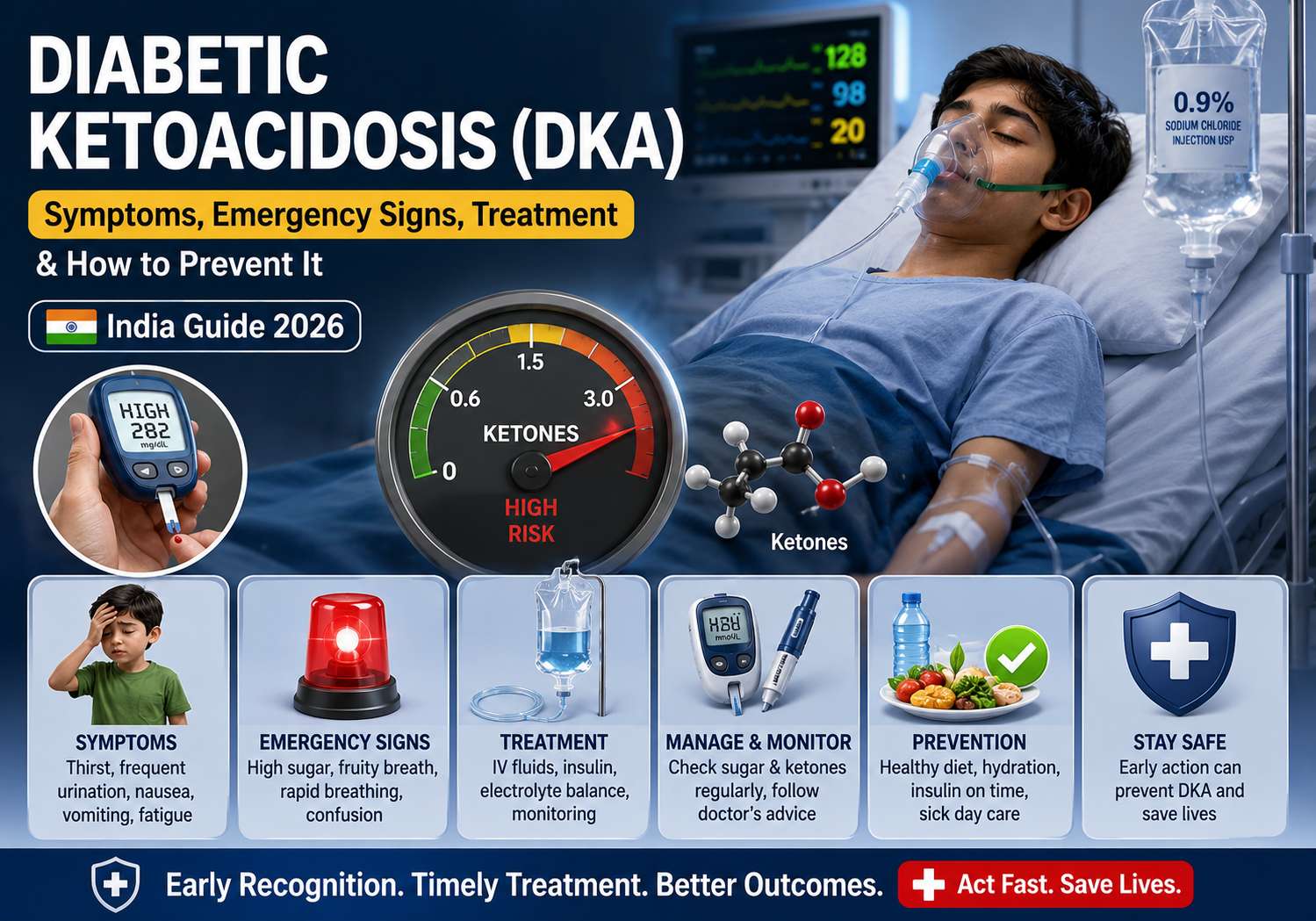
Diabetic ketoacidosis does not give you days to think about it. It gives you hours.
Most Indian families have never heard the term before the day their child is rushed to the ICU. And yet the warning signs — sweet-smelling breath, relentless vomiting, a child who cannot be woken — were there for hours before anyone realised what was happening.
DKA is what happens when the body runs completely out of insulin. Without insulin, your cells cannot use sugar for energy. So the body starts burning fat instead — and that process floods the blood with acids called ketones. Left untreated, it is fatal. Caught early, it is entirely survivable.
Three signs that mean go to hospital right now:
- Fruity or sweet-smelling breath in a diabetic child
- Vomiting alongside high blood sugar readings
- Drowsiness or confusion in a child with diabetes
This guide explains exactly what DKA is, every symptom to watch for, what happens at the hospital — and the three simple rules that prevent it from ever happening again.
What Is Diabetic Ketoacidosis (DKA)? The Life-Threatening Complication Every T1D Family Must Understand
Imagine your body is a bustling factory. Sugar is the fuel waiting outside, and insulin is the key that unlocks the doors. In diabetic ketoacidosis (DKA), the body completely runs out of these insulin keys.
Because sugar stays locked out on the bloodstream highway, your cells begin starving. Panicking, your liver furiously breaks down fat for emergency fuel instead. Think of this like burning toxic, treated wood inside a closed room—it fills your bloodstream with a highly dangerous, acidic waste product called ketones. This triggers a hazardous triad: sky-high blood sugar, a flood of ketones, and dangerously acidic blood.
Why It’s an Absolute Emergency
Diabetic ketoacidosis strikes rapidly over a few hours or days. Left untreated, this toxic, acidic buildup can cause extreme dehydration, kidney failure, or life-threatening brain swelling (cerebral edema). Tragically, 25% to 50% of children only discover they have Type 1 diabetes when they land in the emergency room with severe DKA.
In toddlers and teens, DKA is frequently misdiagnosed as a basic stomach flu, pneumonia, or appendicitis. Watch for these critical red flags:
- Heavy Breathing: Deep, labored, and heavy gasping for air (Kussmaul respiration).
- The Stomach Trap: Persistent nausea, vomiting, and intense belly pain.
- Brain Fog: Unusual confusion, severe drowsiness, or struggling to wake up.
- The Flush: Non-stop, excessive thirst coupled with constant bathroom trips.
How to Protect Your Family
True DKA requires immediate hospital ICU care with IV fluids and continuous insulin. Prevention is your ultimate shield:
- Never Stop Basal Insulin: Even if your child is sick and cannot eat a single bite, their body still absolutely requires baseline insulin to stop the liver from burning fat.
- Test for Ketones: Always check urine strips or blood ketone meters during any illness, or whenever blood sugar levels cross 200 mg/dL.
DKA Symptoms in Children and Adults: Every Warning Sign — From Fruity Breath to Confusion
Think of diabetic ketoacidosis (DKA) as an internal wildfire. It can escalate from standard high blood sugar to a severe metabolic crisis in just a few hours. Recognizing the smoke early can save a life.
Early Flags (The Sugar Flood)
Before full-blown DKA strikes, the body showcases the classic hallmarks of untreated diabetes:
- The Fluid Drain: Unquenchable thirst (polydipsia) and non-stop urination (polyuria)—look for sudden bedwetting or waking up multiple times at night.
- The Energy Crash: Sudden weight loss and constant hunger, alongside blurry vision and profound exhaustion.
The Acidic Crisis (Body Shock)
As toxic ketones build up and turn the blood dangerously acidic, the body goes into survival mode:
- Fruity Breath: A distinct acetone or sweet, fruit-like odor.
- Air Hunger: Deep, heavy, and labored breathing (Kussmaul respiration) as the lungs try to blow off the acid.
- The Stomach Trap: Severe belly pain and relentless vomiting. In pediatric cases, over 50% present with vomiting, which is frequently misdiagnosed as a basic stomach flu.
Brain & Toddler Red Flags
- Mental Shutdown: Unusual drowsiness, confusion, or extreme irritability—altered mental states hit nearly half of children admitted with DKA.
- Baby Signs: In infants, watch for sunken eyes, crying without tears, or a fiery, stubborn diaper yeast rash.
Critical Emergency: Brain Swelling
Cerebral edema is a rare but highly fatal complication in children. If you notice a persistent headache, projectile vomiting, a slow heart rate, or age-inappropriate incontinence, rush to the emergency room immediately.
DKA Causes in India: Why It Happens and What Triggers It Most Often
Think of your body’s insulin supply like water for a car radiator. If the water stops flowing, the engine overheats, sparking a dangerous crisis like diabetic ketoacidosis (DKA). In India, this system breaks down due to unique real-world roadblocks.
1. The Invisible Diagnosis
Shockingly, over 56% of Indian children admitted with DKA didn’t even know they had diabetes. Because early signs mimic common local illnesses, it is frequently misdiagnosed as malaria, typhoid, or a stomach flu, causing dangerous treatment delays.
2. The Sick-Day Mistake
For those already diagnosed, infections and missing insulin are the primary triggers. A highly dangerous mistake families make is stopping insulin completely when a child is vomiting or refusing food. A sick body actually needs baseline fuel to prevent the liver from producing toxic acid.
3. Cultural & Medical Roadblocks
- The Herbal Trap: Halting insulin to try unproven alternative medicines is a massive trigger. For Type 1 diabetes, insulin is irreplaceable.
- Cost Struggles: Financial stress forces some families to dangerously ration doses.
- Stealth Med Threats: Certain medications (like SGLT2 inhibitors) can spark a stealth emergency where the blood turns dangerously acidic even though sugar levels look completely normal (under 250 mg/dL).
DKA Treatment in India: What Happens at the Hospital — Step by Step
If your loved one is rushed to the hospital with diabetic ketoacidosis, the fast-paced environment can feel terrifying. Understanding the step-by-step protocol used by doctors, anchored securely in the Indian Council of Medical Research (ICMR) guidelines, can give you immense strength and peace of mind.
Think of the medical team as specialized technicians carefully rebooting a completely dried-out, overheated engine. Here is their exact lifesaving checklist:
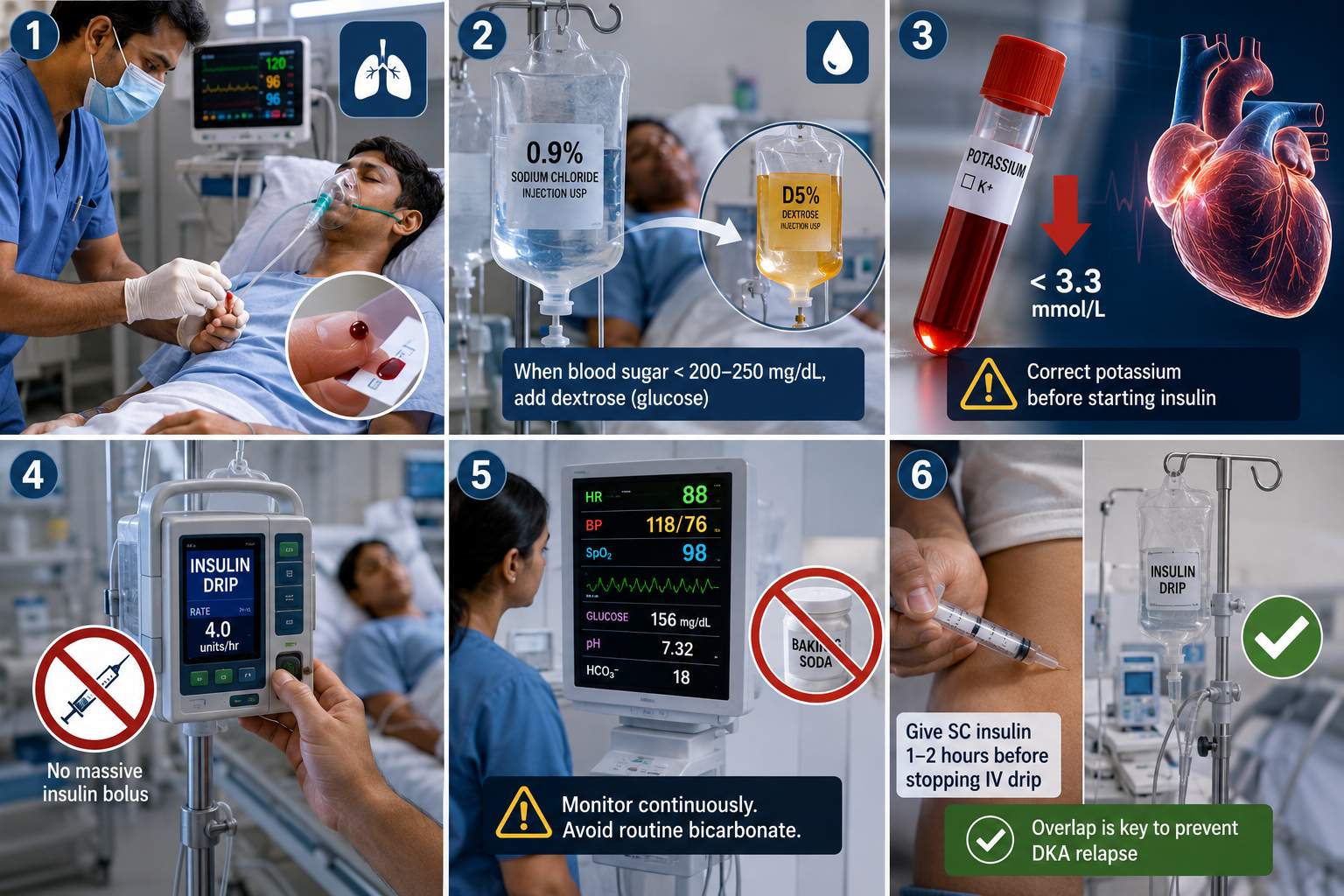
- Step 1: Immediate Triage: The team instantly secures the patient’s breathing and circulation while drawing baseline blood drops to map out exactly how acidic the blood has become.
- Step 2: Rehydrating the “Dried Sponge” (IV Fluids): Before a single drop of insulin is given, doctors run aggressive IV saline fluids to rescue severely dehydrated organs. Crucially, once blood sugar drops below 200–250 mg/dL, they blend glucose (dextrose) into the IV line. This acts as a vital safety net, preventing a low-sugar crash while allowing insulin to continue its job of melting away toxic ketones.
- Step 3: The Potassium Checkpoint: Insulin acts like a powerful magnet, pulling potassium—a vital heart mineral—out of the bloodstream and into the cells. If blood potassium is dangerously low (under 3.3 mmol/L), doctors must correct it before starting insulin to protect the heart’s rhythm.
- Step 4: The Steady Insulin Drip: A continuous, highly controlled IV insulin drip is started. Indian guidelines strictly warn against giving a massive, sudden insulin blast, as dropping sugar too fast can trigger deadly brain swelling (cerebral edema).
- Step 5: Constant Tracking: Vitals and blood numbers are monitored around the clock. Routine baking soda (bicarbonate) is avoided because it can paradoxically worsen brain distress.
- Step 6: Handing Over the Baton: To safely stop the IV drip, a standard under-the-skin insulin injection must be given 1 to 2 hours before the drip is turned off. Stopping the IV line too early without this intentional overlap will cause a rapid, dangerous relapse right back into diabetic ketoacidosis.
How to Prevent DKA: Sick Day Rules, Ketone Testing & The 3 Things That Save Lives
When fighting an illness, your body releases stress hormones that act like gasoline on a fire, causing blood sugar to skyrocket. To prevent the wildfire of diabetic ketoacidosis, you must master three foundational rules.
The 3 Lifesaving Rules
- Never Stop Insulin: Halting doses because a child is vomiting or not eating is a deadly mistake. The body always needs background (basal) insulin to stop the liver from burning fat into toxic acid.
- Hydrate & Keep Carbs Moving: Dehydration accelerates DKA. If blood sugar runs low, feed them sweet liquids so you can continue giving insulin safely.
- Test, Don’t Guess: Check blood sugar at least every 4 hours.
The Ketone Traffic Light System
Ketones reveal if your blood is turning acidic. Use a blood ketone meter (measuring beta-hydroxybutyrate)—it acts like a real-time GPS compared to slow, outdated urine strips. Test if sugar crosses 250 mg/dL or during any fever or vomiting:
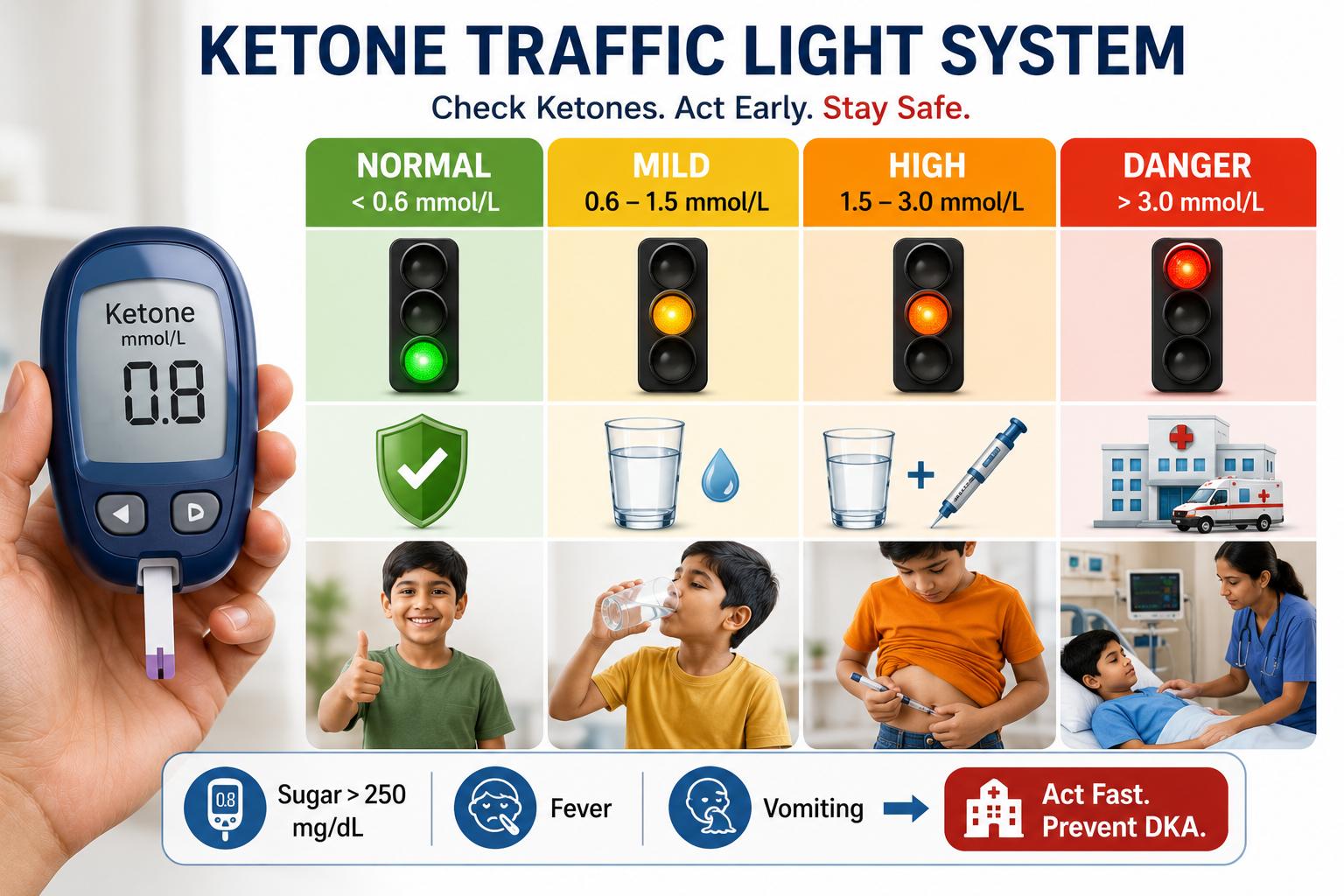
- Normal (< 0.6 mmol/L): Safe zone.
- Mild (0.6 to 1.5 mmol/L): Drink extra water; you may need a small insulin correction.
- High (1.5 to 3.0 mmol/L): High risk. Take extra fluids and correction insulin immediately.
- Danger (> 3.0 mmol/L): Severe emergency. Urgent hospital admission required.
Sick Day Playbook
Illness means your body is under stress and might need 5% to 20% more rapid insulin every 4 to 6 hours. Rush to the ER if the patient is under 5 years old, breathing heavily, confused, or if ketones keep rising despite corrective doses.
- Pump Alert: Pumps lack long-acting insulin reserves; a silent clog can spark DKA in hours. Always keep backup syringes handy.
- SGLT2 Danger: These medications carry a unique risk of stealth DKA, turning blood acidic even with completely normal blood sugar (under 200 mg/dL).
FAQ
How do you diagnose diabetic ketoacidosis (DKA)?
To diagnose Diabetic Ketoacidosis (DKA), three concurrent criteria must be met:
Hyperglycemia: Blood glucose of 200 mg/dL or greater, or a prior history of diabetes.
Ketosis: Blood beta-hydroxybutyrate levels of 3.0 mmol/L or greater, or urine ketones of 2+ or higher.
Metabolic Acidosis: Blood pH < 7.3 and/or bicarbonate < 18 mmol/L.
Additionally, the anion gap is no longer recommended as a first-line diagnostic criterion.
How to reverse DKA at home?
Full Diabetic Ketoacidosis (DKA) is a life-threatening emergency requiring hospital treatment. However, you can manage early impending DKA using strict sick day rules to prevent hospitalization. You must test blood glucose and ketones frequently, hydrate aggressively with fluids containing salt and carbohydrates, and administer extra insulin. Go to the hospital immediately if vomiting persists, confusion develops, or ketones remain dangerously high.
What is the main cause of diabetic ketoacidosis?
Diabetic ketoacidosis (DKA) is fundamentally caused by a severe deficiency of insulin coupled with an excess of counter-regulatory hormones like glucagon. Clinically, the most common triggers that lead to this metabolic crisis are undiagnosed or new-onset diabetes, acute infections or illnesses, and the omission of insulin doses.
What happens to the body during diabetic ketoacidosis?
During diabetic ketoacidosis, a lack of insulin and an excess of counter-regulatory hormones, such as glucagon, severely disrupt the body’s metabolism. The liver overproduces glucose, causing extreme hyperglycemia. Simultaneously, it rapidly breaks down fats into ketones, leading to a life-threatening triad of hyperglycemia, high blood ketones, and dangerously acidic blood.
Reference:
https://www.ncbi.nlm.nih.gov/pmc/articles/PMC10416834
https://pubmed.ncbi.nlm.nih.gov/22207489
https://www.ncbi.nlm.nih.gov/pmc/articles/PMC10416834
https://pmc.ncbi.nlm.nih.gov/articles/PMC7748377
https://pmc.ncbi.nlm.nih.gov/articles/PMC10156932
https://www.ccjm.org/content/92/3/152
https://pubmed.ncbi.nlm.nih.gov/16836267
https://pmc.ncbi.nlm.nih.gov/articles/PMC10156932
About the author
It’s me Mohammad Junaid Rain an MBBS student at GMC Nagpur, passionate about making evidence-based medical information accessible to every Indian. “medstuffs.com” is dedicated to clear, disease education for patients and caregivers.
Disclaimer: This article is for educational purposes only and does not substitute professional medical advice. Please consult your doctor for diagnosis and treatment.
4 thoughts on “Diabetic Ketoacidosis (DKA): Symptoms, Emergency Signs, Treatment & How to Prevent It — India Guide 2026”