
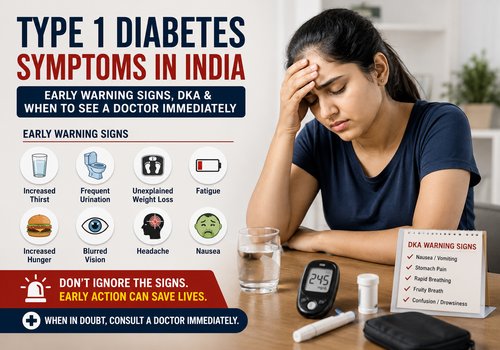
A child in India is admitted to the ICU with diabetic ketoacidosis every single day — not because the disease was undetectable, but because the symptoms were visible for weeks and nobody recognised them.
The early warning signs of type 1 diabetes symptoms in India are not subtle. They are loud. A child drinking water constantly at 2am. A child who suddenly cannot see the blackboard clearly. A child who has lost 4 kilos in three weeks — and everyone assumed it was worms.
Research shows the median time from first symptom to diagnosis in children is 25 days. In India, that window is longer — because the symptoms look exactly like dengue, typhoid, and summer dehydration. Half of all T1D children present with a life-threatening DKA emergency at their very first diagnosis.
This article gives you the clinical knowledge to close that window. Every warning sign. The emergency signals no parent should miss. And a step-by-step action guide written specifically for India
The 4 Ts: India’s Official Early Warning Signs of Type 1 Diabetes
Recognizing Type 1 Diabetes (T1D) early can save a life. To protect families, the India Health Ministry and ICMR endorse a simple, life-saving awareness framework called the 4T model to catch the core red flags before it is too late:
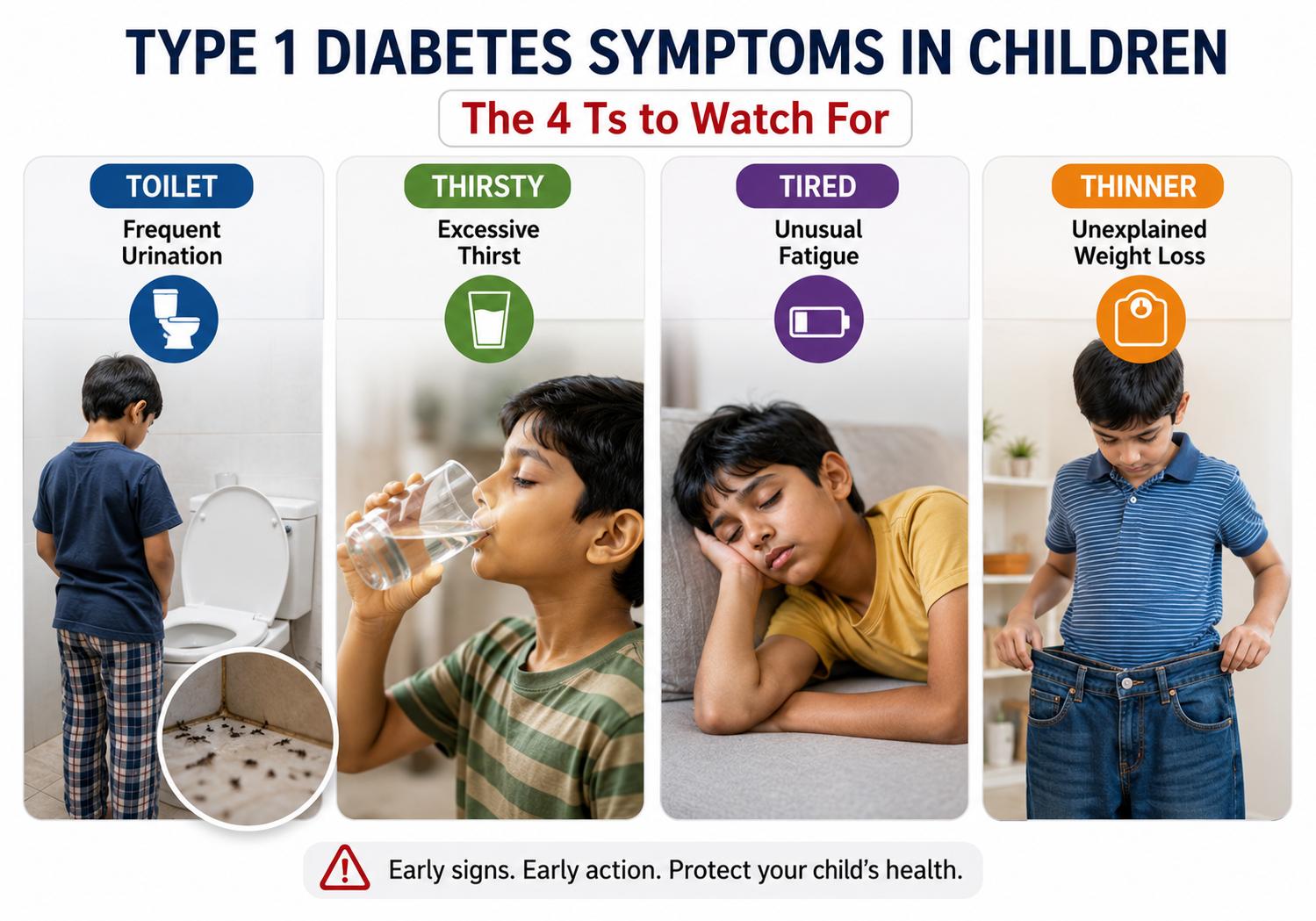
- Toilet (Frequent Urination): Known medically as polyuria, a child visits the bathroom constantly or suddenly resumes bedwetting. In Indian households, a unique environmental clue is often reported: household ants gathering around the bathroom floor due to sugar spilled in the urine.
- Thirsty (Excessive Thirst): Clinically termed polydipsia, this manifests as a fierce, unquenchable thirst where a child drinks water continuously but remains dry.
- Tired (Unusual Fatigue): Because the body’s cells are starving for glucose energy, children experience overwhelming, unrefreshing exhaustion, and infants become deeply irritable.
- Thinner (Unexplained Weight Loss): A sudden, visible drop in weight occurs despite the child having a ravenous, increased appetite (polyphagia).
According to ADA 2025/2026 guidelines, these classic hyperglycemic symptoms are sufficient for a definitive T1D diagnosis when paired with a random plasma glucose reading of greater than 200 mg/dL.
The danger of missing these signs is catastrophic. ISPAD 2024 clinical data reveals that nearly 50% of children with T1D present in life-threatening Diabetic Ketoacidosis (DKA) at diagnosis—frequently because the early 4T warning signs were missed for weeks or mistaken for common illnesses like gastroenteritis, typhoid, or malaria. If your child exhibits the 4 Ts, demand a finger-prick blood sugar test immediately.
Frequent Urination in Children: When Is It a Diabetes Warning Sign
A landmark clinical study reveals that frequent urination (polyuria) strikes 83.9% of children newly diagnosed with Type 1 Diabetes (T1D)—second only to extreme thirst at 97.7%.
While a healthy child aged 4–12 years typically goes 4–7 times a day, diabetic polyuria escalates this to a grueling 10–15+ times daily, including heavy nighttime waking (nocturia affects 73.6% of these kids).
The Kidney Threshold
Why does this happen? Think of the kidneys like a home water-filtration system. According to official ADA guidelines, when blood sugar climbs past 180 mg/dL, it completely floods the system and blows right past the kidneys’ structural absorption gates. This triggers osmotic diuresis—the body desperately using a massive volume of water to flush the toxic excess sugar out through the bladder.
In India, this critical warning sign is frequently masked for weeks because families routinely blame the intense summer heat for excessive thirst and extra bathroom trips.
High-Alert Red Flags of type 1 diabetes symptoms in india
- Sudden Bedwetting: A previously toilet-trained child suddenly losing overnight bladder control.
- The Ant Clue: A classic contextual sign in India—ants visibly gathering around the child’s urine due to high glucose content.
- The Classic Triad: Constant bathroom trips paired with unquenchable thirst, extreme hunger, and sudden weight loss.
The Ultimate Danger
Missing these signs risks rapid progression to Diabetic Ketoacidosis (DKA), a fatal complication present in one-third of Indian diagnoses. If your child develops nausea, abdominal pain, or a distinct fruity breath odor, do not mistake it for typhoid or gastroenteritis. Run a finger-prick blood glucose test immediately.
Extreme Thirst & Dry Mouth: Why It Happens and When to Worry
A landmark study in the PubMed Central database reveals that extreme thirst, known medically as polydipsia, is the most common single symptom of Type 1 Diabetes, appearing in 97.7% of newly diagnosed children. The American Diabetes Association 2026 guidelines classify it as a definitive hallmark symptom.
How It Happens: High blood sugar levels force the kidneys into overdrive, creating a rapid fluid drain as the body tries to flush out excess sugar through urine. This severe dehydration triggers an emergency thirst signal in the brain, leaving the mouth completely dry.
In India, this warning sign is dangerously easy to miss. During intense summer months, families routinely normalize excessive drinking, attributing it to hot weather, playing outside, or eating spicy food.
The crucial clinical differentiator is simple: normal thirst is relieved after drinking a standard amount of water. Diabetic thirst is entirely unquenchable. The child will demand water constantly, even while resting in a cool, air-conditioned environment.
When to Rush to the Casualty Ward
While extreme thirst warrants a prompt medical evaluation, it becomes a life-threatening emergency called Diabetic Ketoacidosis if the insulin-deprived body begins burning fat for fuel and producing toxic blood acids called ketones. Seek immediate emergency medical care at a hospital casualty ward if a dry mouth is accompanied by:
- Nausea, vomiting, or an inability to keep fluids down
- Severe abdominal pain or deep, rapid breathing
- A distinct, fruity breath odor or extreme drowsiness and confusion
Unexplained Weight Loss in Children: A Symptom Parents Often Miss
Sudden, unexplained weight loss is a classic hallmark of new-onset Type 1 Diabetes in children. Yet, it remains one of the most frequently missed warning signs by both parents and physicians.
The “Starving-While-Eating” Trap
What makes this symptom so deceptive is its contradictory nature. A child will develop a ravenous, drastically increased appetite, yet continue to shed weight and look visibly thinner.
To understand this easily: think of your child’s body like a car with a broken fuel line. They are eating plenty of food, but because their pancreas is no longer making insulin, that food (glucose) cannot enter their cells. Starving for energy, the body is forced to rapidly burn its own muscle tissue and fat reserves just to survive.
The Dangerous Road to Misdiagnosis
When this progressive weight loss is overlooked or chalked up to a sudden childhood growth spurt, the underlying metabolic crisis escalates rapidly into a life-threatening medical emergency called Diabetic Ketoacidosis. As toxic blood acids build up, the child will exhibit extreme exhaustion, a distinct fruity-tasting breath odor, or even slide dangerously into a coma.
Tragically, because these critical symptoms overlap heavily with everyday childhood infections, Type 1 Diabetes is routinely misdiagnosed as:
- Gastroenteritis (stomach flu) or appendicitis
- Pneumonia, malaria, or typhoid
If your child is thinning out despite eating more than usual, do not wait. Demand a simple, pain-free finger-prick blood glucose test at your local clinic immediately—it takes seconds and can save a life.
Fatigue & Weakness in Children: Could It Be Diabetes?
Profound, unrefreshing exhaustion is a primary early warning sign of new-onset Type 1 Diabetes in children. If your active child is suddenly tired all the time, it is a critical symptom demanding close clinical attention.
To understand this simply, think of your child’s body like a car with a full tank of fuel, but a broken fuel pump. Because the immune system mistakenly destroys insulin-producing cells in the pancreas, glucose (sugar) gets trapped in the bloodstream. The energy is right there, but without insulin acting as the vehicle’s fuel pump, it cannot reach the cells. This leaves the body’s internal engines completely starved of energy, causing constant, heavy fatigue.
How It Presents by Age
- Older Kids & Teenagers: They will frequently complain of heavy limbs, constant weakness, and show a sudden, noticeable drop in school or sports energy levels.
- Infants & Toddlers: Unable to verbalize exhaustion, their fatigue manifests as extreme, unusual irritability, a distinct drop in physical play, or sleeping far more than normal.
This fatigue rarely travels alone. Watch closely for the accompanying classic triad: frequent urination (including sudden bedwetting), unquenchable thirst, and unexplained weight loss despite a ravenous appetite.
Blurred Vision, Stomach Pain & Other Less-Known Symptoms of Type 1 Diabetes
While classic red flags like extreme thirst capture attention, Type 1 Diabetes often hides behind less obvious, quiet symptoms that parents and physicians completely misinterpret.
1. Blurred Vision and Nerve Tingling
When blood sugar climbs to dangerous heights, it physically draws fluid into the lenses of the eyes, temporarily warping their shape. This makes blurry eyesight a direct, early indicator. Simultaneously, circulating glucose can irritate delicate nerve pathways, causing a distinct “pins-and-needles” numbness or tingling in a child’s feet.
2. The Stomach Pain and Infection Trap
High blood sugar turns body fluids into a sugary feeding ground where yeast thrives. This frequently triggers unyielding vaginal yeast infections in teenage girls or a severe, stubborn diaper rash in infants that standard barrier creams cannot cure.
Even more critical are gastrointestinal warnings: sudden stomach pain, nausea, and vomiting. This is not simple food poisoning; it is a primary sign of Diabetic Ketoacidosis, a life-threatening emergency where the blood becomes highly acidic. Because these symptoms perfectly mimic appendicitis, gastroenteritis, typhoid, or malaria, severe diagnostic delays can occur.
3. Immediate Emergency Red Flags
If Diabetic Ketoacidosis escalates, rush to the nearest hospital casualty ward immediately if you notice:
- Kussmaul Breathing: Heavy, deep, rapid gasping for air as the lungs try to clear blood acids.
- Fruity Breath: A strange, sweet breath odor (like nail polish remover) caused by escaping ketones.
- Mental Shifts: Unusual irritability, heavy disorientation, or deep drowsiness that can rapidly progress into a coma.
Why Type 1 Diabetes Is Often Misdiagnosed as Viral Fever or Typhoid in India
In India, diagnosing Type 1 Diabetes is often a race against a deadly medical smokescreen. Before a child is properly diagnosed, the disease frequently escalates into a severe, life-threatening metabolic crisis known as Diabetic Ketoacidosis (DKA), where the blood becomes dangerously acidic. DKA acts like a master camouflage artist, perfectly mimicking endemic monsoonal infections like typhoid, malaria, and gastroenteritis.
Here is why our healthcare system and families get tripped up:
- The Gut Infection Mask: Diabetic Ketoacidosis triggers intense vomiting, severe nausea, and sharp, diffuse stomach pain. To a busy local physician, this clinical picture looks identical to food poisoning, typhoid, or acute appendicitis, completely masking a systemic insulin deficiency.
- The “Decoy” Fever: A blood sugar crisis is frequently brought on by an actual, concurrent illness like pneumonia or a urinary tract infection. Because the child presents with a genuine fever, chills, and coughing, doctors focus entirely on treating the infection with antibiotics while missing the metabolic wildfire underneath.
- The Crisis Presentation: According to the Registry of People with Diabetes with Youth Age at Onset in India (YDR), a shocking 28.7% of Indian youth are already in deep DKA by the time they are diagnosed. At this critical stage, dramatic abdominal distress completely overshadows subtle warning signs like subtle weight loss or early frequent urination.
The Systemic Diagnostic Trap: In many rural or lower-level public clinics, basic, rapid diagnostic tools like simple glucometers or point-of-care ketone strips are scarce.
When clinicians blindly administer standard treatments for a presumed “viral fever” without a basic blood sugar check, it risks pushing the child into fatal shock, acute kidney injury, or dangerous swelling of the brain (cerebral edema). Saving these young lives requires looking past the fever and demanding a simple, instant finger-prick glucose test.
What Is Diabetic Ketoacidosis? Symptoms, Emergency Signs & What to Do
Imagine your body is a car running completely out of fuel because the cellular door key (insulin) is missing. Even if there is plenty of sugar floating in your bloodstream, your cells are actively starving. In a panic, your liver begins rapidly burning body fat for alternative emergency energy. This backup plan overproduces toxic, acidic byproducts called ketones, which accumulate in your bloodstream and trigger a life-threatening crisis known as Diabetic Ketoacidosis.
Early Red Flags & Symptoms
As the bloodstream turns dangerously acidic, it triggers systemic warning signs:

- The Classic Triad: An insidious worsening of excessive thirst (polydipsia), frequent urination (polyuria), and rapid, unexplained weight loss.
- Gastrointestinal Distress: Severe nausea, ongoing vomiting, decreased appetite, and diffuse abdominal or stomach pain.
- Respiratory Warnings: Labored, deep, and rapid gasping (Kussmaul breathing) paired with a highly distinct fruity or acetone breath odor as the lungs desperately try to exhale excess ketones.
- Dehydration Signals: A flushed face, extremely dry skin and mouth, a racing heart rate (tachycardia), and low blood pressure.
When to Rush to the Casualty Ward
Diabetic Ketoacidosis can cause rapid cardiovascular collapse or critical brain swelling (cerebral edema). Go to the nearest hospital Emergency Room (Casualty ward) immediately if you note:
- An inability to keep fluids down due to persistent vomiting.
- Severe, debilitating stomach pain.
- Altered mental status, ranging from confusion and unusual irritability to profound drowsiness or a loss of consciousness.
The Clinical Action Plan
If blood sugar crosses 200–250 mg/dL and you feel ill, test your blood or urine ketones immediately. Never attempt to manage moderate-to-large ketones at home.
In the hospital, doctors will initiate an immediate, step-by-step stabilization process: Intravenous (IV) fluids to reverse severe dehydration, a continuous insulin infusion to halt fat breakdown, and vital electrolyte replacement (specifically potassium) to prevent life-threatening heart arrhythmias while treating the underlying trigger, such as a hidden infection.
How Quickly Do Type 1 Diabetes Symptoms Appear? Days vs Weeks Explained
To families, Type 1 Diabetes symptoms feel like an overnight avalanche. One day a child is perfectly fine; a week later, they are in a medical emergency.
While visible symptoms can explode over just days or weeks, the underlying autoimmune attack has actually been brewing silently for months or even years.
The Dam Break Analogy: Think of the pancreas like a structural water dam. Deep below the surface, the immune system silently chips away at insulin-producing beta cells. Subtle blood sugar shifts begin roughly 6 months before diagnosis, yet the patient feels completely healthy. Visible symptoms only erupt when the dam finally breaks—meaning a critical threshold of cells is destroyed, causing an absolute lack of insulin.
The speed of this break depends heavily on age:
- Children & Infants (The Sprint): Their immune systems attack aggressively. Beta cells vanish rapidly, causing severe symptoms to erupt in a matter of days. This lightning-fast progression is why life-threatening Diabetic Ketoacidosis is frequently a child’s very first warning sign.
- Adults (The Marathon): Slower cell destruction allows adults to retain just enough insulin function to stave off major crises for years. Because of this slow creep, they are often misdiagnosed with Type 2 Diabetes initially.
The Infection Trigger
A minor viral or bacterial illness acts like an environmental accelerant. Physical stress can transform modest, hidden blood sugar elevations into a full-blown emergency in a matter of days, sending newly diagnosed patients straight to the hospital casualty ward for immediate stabilization.
Symptoms of Type 1 Diabetes in Adults vs Children: What Is Different in India?
Type 1 Diabetes presents entirely different timelines depending on age. In children, it is an aggressive sprint. The immune system destroys insulin-producing cells so rapidly that severe symptoms explode in days, frequently forcing them into a life-threatening metabolic crisis called Diabetic Ketoacidosis as their very first warning sign. In adults, it is a slow marathon; symptoms creep in over months, often causing doctors to mistake it for Type 2 Diabetes initially.
In India, unique cultural and environmental factors heavily complicate this diagnostic timeline:
- The “Ants” Indicator: A distinct household warning occurs when families notice ants gathering around a child’s urine on the bathroom floor, drawn by heavily spilled glucose.
- The Tropical Infection Smokescreen: Data from the Registry of People with Diabetes with Youth Age at Onset in India reveals that 28.7% of youth are already in deep Diabetic Ketoacidosis by diagnosis. Because its emergency symptoms—severe vomiting and stomach pain—perfectly mimic regional infections, it is tragically misdiagnosed as malaria, typhoid, or gastroenteritis.
- The Pancreatic Twin: Mainly in Kerala and Tamil Nadu, clinicians must distinguish Type 1 Diabetes from Fibrocalculous Pancreatic Diabetes. This tropical condition strikes thin, young individuals but is triggered by malnutrition and pancreatic stones rather than an autoimmune disease.
- The Alternative Therapy Trap: Cultural reliance on non-injectable alternative medicines instead of life-saving insulin remains a major hurdle, frequently triggering recurrent, fatal metabolic relapses.
What to Do If You Suspect Type 1 Diabetes: A Step-by-Step Action Guide for Indians
If your child is constantly exhausted, drinking endless water, losing weight, or attracting ants after urinating, act immediately. Do not brush this off as a simple growth phase or a passing monsoon viral fever.
1. Get Definitive Blood Tests
Avoid unproven alternative therapies that delay real care. A clinician will diagnose diabetes using three strict clinical criteria:
- Random Blood Sugar: 200 mg/dL or higher alongside classic symptoms.
- Fasting Blood Sugar: 126 mg/dL or higher after an 8-hour fast.
- HbA1c: 6.5% or higher.
2. Screen for Ketone Emergencies
If sugar levels exceed 200 mg/dL, check urine or blood ketones immediately. Delayed diagnosis risks Diabetic Ketoacidosis—a deadly metabolic crisis striking 28.7% of Indian youth at presentation. Rush to a hospital casualty ward if you notice deep gasping, vomiting, severe stomach pain, or a fruity breath odor.
3. Rule Out the Pancreatic Twin
In India—predominantly Kerala and Tamil Nadu—Type 1 Diabetes is frequently confused with Fibrocalculous Pancreatic Diabetes, a malnutrition-linked condition. Request a Pancreatic Autoantibody panel (like GAD65) and a C-peptide test to definitively confirm true autoimmune cell destruction.
4. Secure Your Insulin Safety Net
Type 1 Diabetes requires lifelong daily insulin. Partner with an endocrinologist to master a basal-bolus regimen and continuous glucose monitoring. Always carry an emergency kit packed with a backup glucometer, glucose powder for low drops, and a glucagon injection kit for severe crises.
FAQ
can you live a normal life with type 1 diabetes?
Yes, you can absolutely live a long and healthy life with Type 1 Diabetes. With proper education, daily insulin treatment, and regular glucose monitoring, you can effectively prevent long-term complications. The goal of modern diabetes care is to ensure you live without stigma or unnecessary restrictions, meaning the condition should not limit your ability to excel in your career or chosen sports.
when is type 1 diabetes is diagnosed?
Type 1 diabetes is officially diagnosed at Stage 3, when overt hyperglycemia occurs. Doctors confirm it using tests like a fasting plasma glucose of 126 mg/dL or higher, a random glucose of 200 mg/dL or higher with classic symptoms, or an A1C of 6.5% or higher. While it can happen at any age, diagnosis is most frequent in children and young adults.
Why is type 1 diabetes so hard to control?
Type 1 diabetes is exceptionally hard to control because the body produces no insulin and loses its natural defenses against low blood sugar, such as glucagon and epinephrine responses. Patients must manually balance daily insulin doses with constantly changing variables like diet, physical activity, and stress. This relentless demand for monitoring and decision-making frequently leads to diabetes distress and treatment burnout.
type 1 diabetes symptoms in females?
Females with Type 1 Diabetes experience classic general symptoms like excessive thirst, frequent urination, unexplained weight loss, and profound fatigue. Additionally, female-specific warning signs and complications include recurrent vaginal yeast infections (candidiasis) and frequent urinary tract infections. Some women may also develop sexual dysfunction, which can manifest as vaginal dryness, decreased sexual desire, and pain during intercourse.
type 1 diabetes symptoms in babies?
In babies, type 1 diabetes symptoms can be difficult to spot. Key warning signs include a noticeable decrease in energy and physical activity, unusual irritability, unexplained weight loss, and physical signs of dehydration. Additionally, a very common and specific indicator in infants is a severe diaper rash (dermatitis) caused by a candidal (yeast) infection.
type 1 diabetes symptoms in toddlers?
In toddlers, type 1 diabetes symptoms can be difficult to recognize. Classic signs include excessive thirst, frequent urination, and unexplained weight loss. Specific behavioral changes often include unusual irritability, moodiness, decreased energy, and refusing to eat or vomiting after meals. Additionally, a severe, persistent diaper rash caused by a yeast (candidal) infection is a very common physical warning sign in this age group.
type 1 diabetes symptoms in males?
Males with Type 1 Diabetes experience classic symptoms such as excessive thirst, frequent urination, unintentional weight loss, and profound fatigue. Additionally, diabetic autonomic neuropathy can cause male-specific complications like erectile dysfunction and retrograde ejaculation. Men with diabetes also have a higher risk of experiencing low testosterone (hypogonadism), which can contribute to decreased libido and further erectile difficulties.
Reference:
https://www.ncbi.nlm.nih.gov/pmc/articles/PMC10305924
https://pmc.ncbi.nlm.nih.gov/articles/PMC11854978
https://www.ncbi.nlm.nih.gov/pmc/articles/PMC4368911
https://www.ncbi.nlm.nih.gov/pmc/articles/PMC4368911
https://www.ncbi.nlm.nih.gov/books/NBK507713
https://pmc.ncbi.nlm.nih.gov/articles/PMC12312823
https://medlineplus.gov/ency/article/000305.htm
https://www.ncbi.nlm.nih.gov/pmc/articles/PMC4368911
https://pubmed.ncbi.nlm.nih.gov/25941655
https://www.ncbi.nlm.nih.gov/pmc/articles/PMC10416834
https://pubmed.ncbi.nlm.nih.gov/21129138
https://www.ncbi.nlm.nih.gov/pmc/articles/PMC10416834
https://pubmed.ncbi.nlm.nih.gov/32809558
https://pmc.ncbi.nlm.nih.gov/articles/PMC11854978
https://www.ncbi.nlm.nih.gov/pmc/articles/PMC12456252
https://www.icmr.gov.in/icmrobject/custom_data/1703247749_icmr_7.pdf
https://www.ncbi.nlm.nih.gov/pmc/articles/PMC10305924
About the author
It’s me Mohammad Junaid Rain an MBBS student at GMC Nagpur, passionate about making evidence-based medical information accessible to every Indian. “medstuffs.com” is dedicated to clear, disease education for patients and caregivers.
Disclaimer: This article is for educational purposes only and does not substitute professional medical advice. Please consult your doctor for diagnosis and treatment.
1 thought on “Type 1 Diabetes Symptoms in India: Early Warning Signs, DKA & Whento See a Doctor Immediately”