
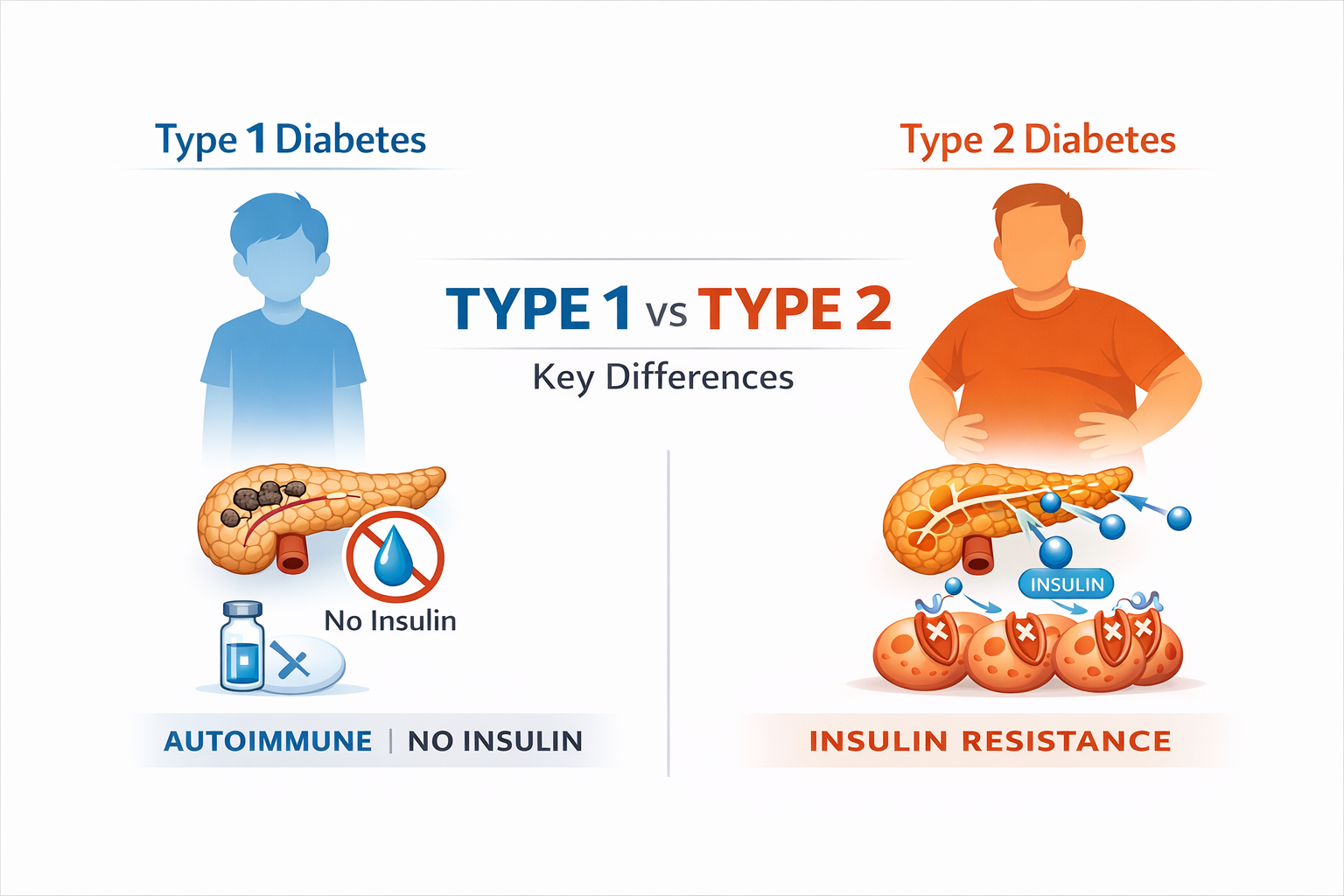
If we have to understand the the type 1 diabetes vs type 2 diabetes mellitus difference we have to first understand, how insulin is affected. When we eat a food, the carbohydrate part ( roti, chawal, etc) gets digested into glucose, this glucose is absorbed by the body. Results in high blood glucose level, but this high level not remain always in normal person. Because as blood glucose level increase, body produce Insulin hormone.
This insulin help in entry of glucose in the cells from the blood, and help in maintaining then normal blood glucose level in the body. If insulin is affected then we suffer from the condition commonly referred as Diabetes.
What happens to insulin in type 1 diabetes and type 2 diabetes mellitus?
- Type 1 diabetes: The body does not produce insulin due to autoimmune destruction of pancreatic beta cells
- Type 2 diabetes: The body produces insulin, but cells do not respond properly (insulin resistance)
Type 1 diabetes vs Type 2 Diabetes mellitus difference (Quick Comparison)
| Feature | Type 1 Diabetes | Type 2 Diabetes |
|---|---|---|
| Cause | Autoimmune destruction | Insulin resistance |
| Insulin | Absent | Present but ineffective |
| Onset | Sudden | Gradual |
| Age group | Children/young adults | Adults (increasing in youth) |
| Treatment | Insulin required | Lifestyle + medication |
What is Type 1 Diabetes?
Type 1 diabetes is an autoimmune disease where the immune system attacks insulin-producing cells in the pancreas. This results in low insulin level in the body causing high blood sugar.
Key points:
- No insulin production
- Rapid onset of symptoms
- Risk of diabetic ketoacidosis (DKA)
- Requires lifelong insulin
Symptoms of type 1 diabetes:
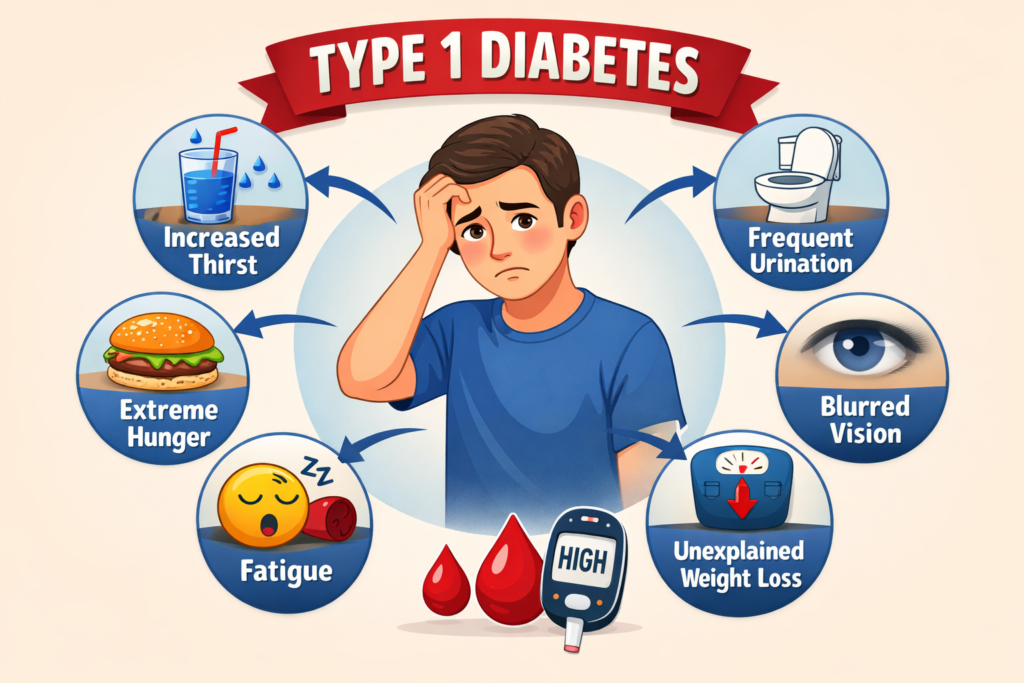
Treatment:
In case of type 1 diabetes we have to provide the external source of the insulin to fulfill the insulin deficient condition. But this insulin is soon metabolized by the body and external insulin will be finished. So we have to take the life-long insulin to have a normal life
According to the American Diabetes Association, Type 1 diabetes results from autoimmune beta-cell destruction.
What is Type 2 Diabetes?
Type 2 diabetes is a metabolic condition where the body becomes resistant to insulin. Insulin is produced normally but body does not respond to it properly.
Key points:
- Insulin resistance + gradual beta-cell failure
- Often linked to obesity and lifestyle
- Develops slowly
- Can be managed with lifestyle and medications
Symptoms of type 2 diabetes:
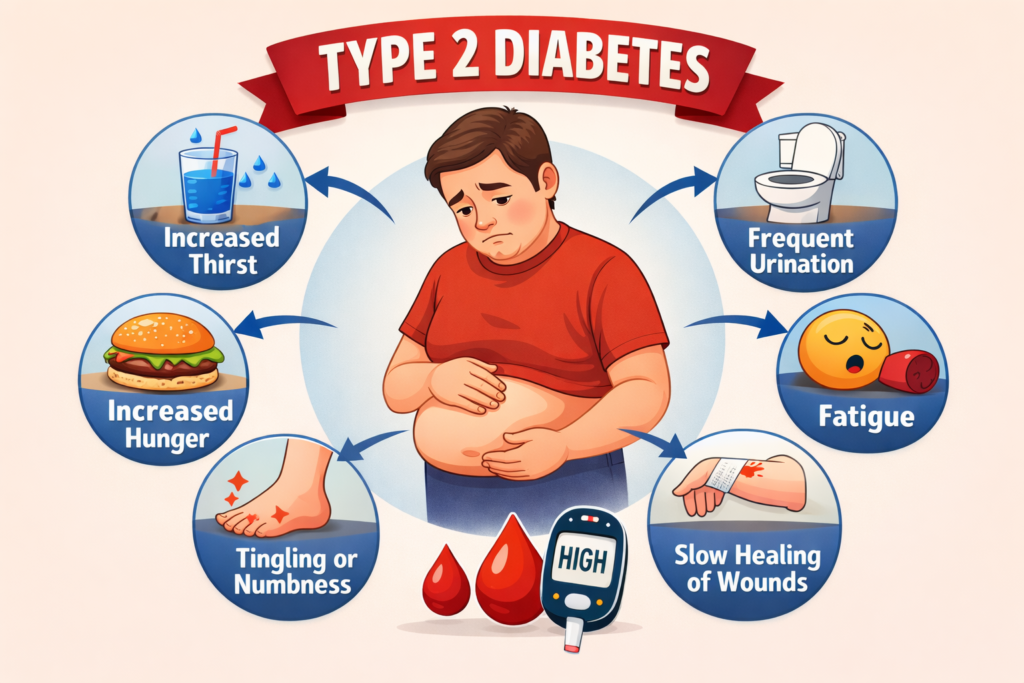
Treatment:
The type 2 condition requires lifestyle modification and medication both. In my MBBS clinical postings i learned that for type 2 diabetes the best drug in india is Metformin.
This drug decreases the peripheral resistance of the body, decrease glucose absorption from the gut. Thus ultimately results in normal blood glucose level
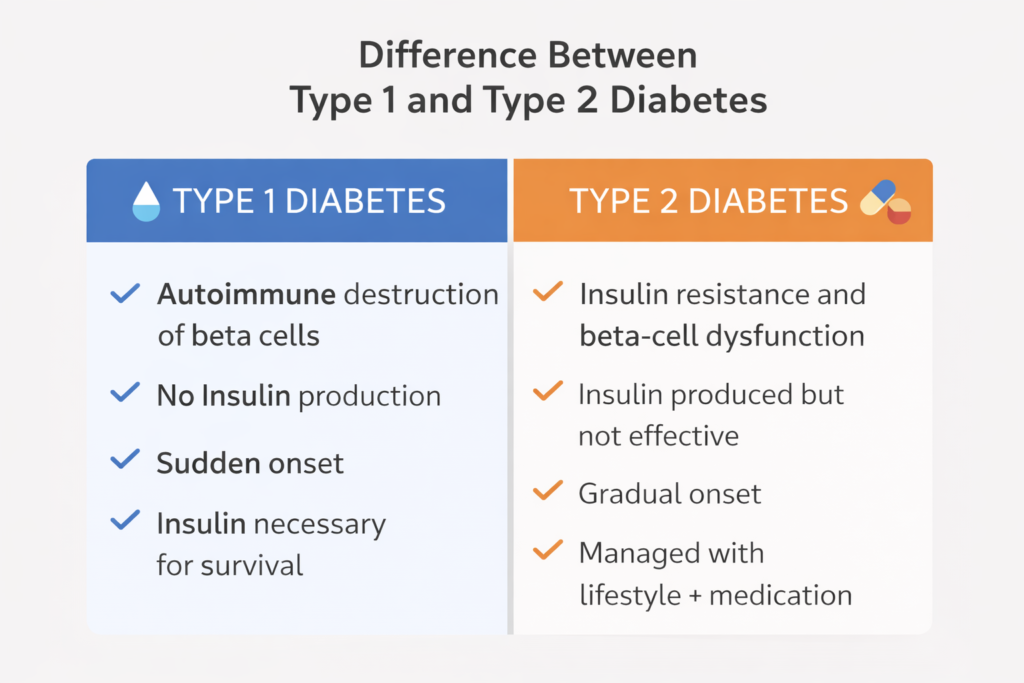
Simple Explanation for type 1 diabetes vs type 2 diabetes mellitus difference
- Type 1 diabetes: No insulin is made
- Type 2 diabetes: Insulin is made but doesn’t work properly
How are they diagnosed?
Both types are diagnosed using:
- Fasting blood glucose
- HbA1c
- Oral glucose tolerance test
Additional tests are required to make a difference between Type1 and type 2:
- Type 1 → Auto-antibodies (GAD, ICA)
- Type 2 → Insulin resistance features
Can Type 2 diabetes be reversed?
Type 2 diabetes can go into remission, especially in early stages with:
- Weight loss
- Diet changes
- Regular exercise
It is not considered a permanent cure.
Summary
FAQs
Which diabetes is more dangerous?
Both are serious. Type 1 is life-threatening without insulin, while Type 2 causes long-term complications.
Do all diabetics need insulin?
No. Only Type 1 always requires insulin. Type 2 may or may not.
Can children get Type 2 diabetes?
Yes, especially with rising obesity rates.
If you want to also read about Prediabetes then just click here.
About the author
Mohammad Junaid Rain is an MBBS student at GMC Nagpur, passionate about making evidence-based medical information accessible to every Indian. “medstuffs.com” is dedicated to clear, doctor-written disease education for patients and caregivers.
Disclaimer: This article is for educational purposes only and does not substitute professional medical advice. Please consult your doctor for diagnosis and treatment.
3 thoughts on “Type 1 diabetes vs Type 2 Diabetes mellitus: Key Differences Explained Simply”