
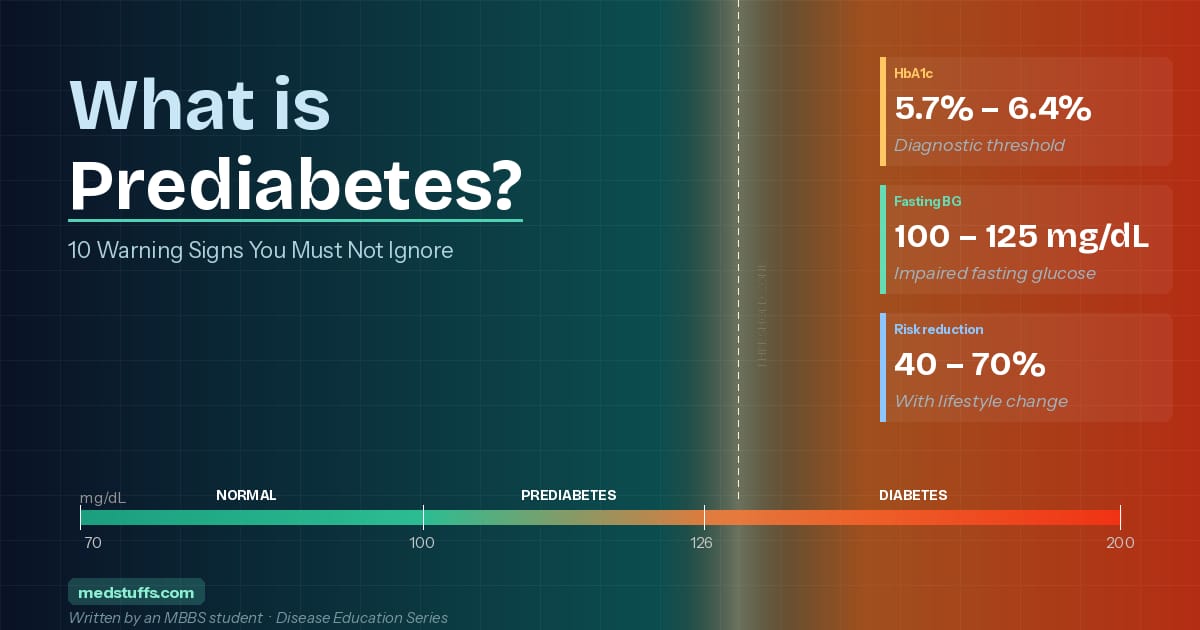
Millions of Indians are walking around with a condition that will silently turn into type 2 diabetes — and most of them have no idea. That condition is prediabetes.
Here is the unsettling reality: in Indian cities, studies estimate that up to 6 out of every 10 adults have either diabetes or prediabetes. And because prediabetes usually causes no obvious symptoms, it almost always goes undetected until it is too late.
The good news? Prediabetes is reversible. If caught early, lifestyle changes alone can reduce your risk of progressing to type 2 diabetes by 40 to 70 percent. But first, you need to know what it is — and whether you might have it.
This article will explain exactly what prediabetes is, the 10 warning signs to watch for, how it is diagnosed, and — most importantly — what you can do about it right now.
Quick summary
Prediabetes is a condition where blood sugar is higher than normal but not yet high enough to be called type 2 diabetes. It usually has no symptoms, affects millions of Indians, and can be reversed with lifestyle changes. Read on to understand it fully.
What Exactly is Prediabetes?
To understand Prediabetes, you first need to understand what insulin does. Insulin is a hormone produced by your pancreas. Its job is to act like a key — it opens up your body’s cells so glucose (sugar from food) can enter and be used as energy.
In Prediabetes, this “key” starts working less effectively. Your cells begin to resist insulin’s signal. This is called insulin resistance. In response, your pancreas tries to produce more insulin to compensate. For a while, it manages. But over time, blood sugar levels creep higher than normal — not yet diabetic, but well above healthy.
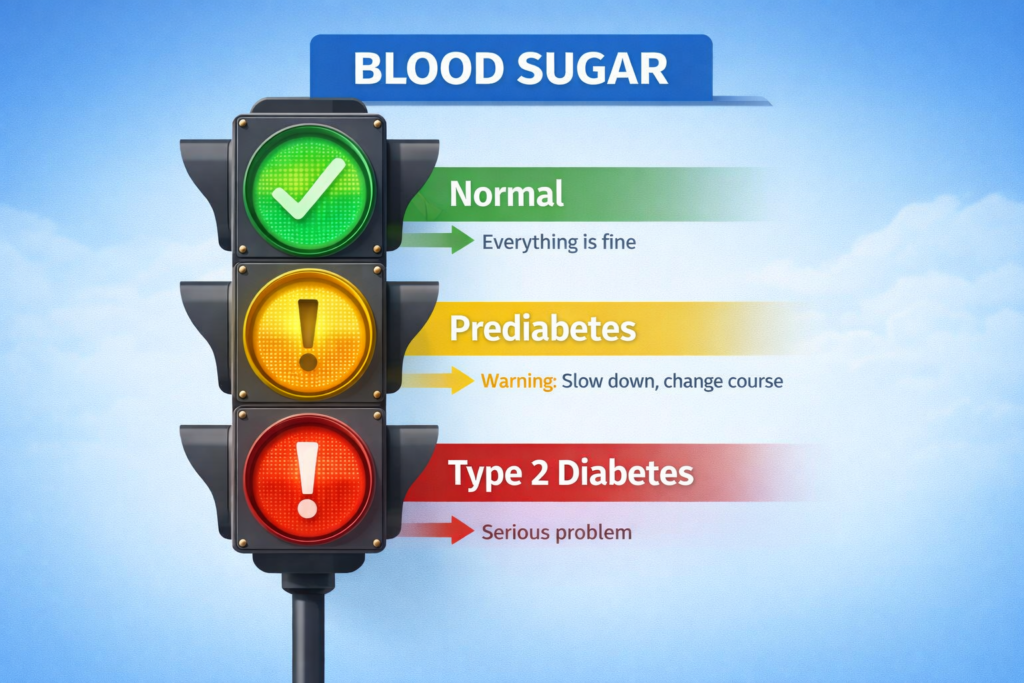
Think of it as a yellow light. Normal blood sugar is a green light — everything is fine. Type 2 diabetes is a red light — there is a serious problem. Prediabetes is the yellow light in between, warning you to slow down and change course before it turns red.
Who is at Risk in India?
Prediabetes does not affect everyone equally. Indians are at significantly higher risk than many other populations — even at lower body weights. This is because Indian genetics tend toward greater visceral fat (fat stored around the organs) and stronger insulin resistance at a lower BMI than Western populations.
| Indian-Specific Risk Facts (Backed by Research) • The ICMR-INDIAB study found prediabetes prevalence in urban India ranges from 7.2% to 16.2% depending on the state. • South Indians have among the highest rates — Tamil Nadu shows up to 8.3% prediabetes prevalence. • Indians progress from prediabetes to type 2 diabetes faster than most other ethnic groups. • A 2025 study found 41.2% of Indian adults aged 45+ are at high risk for type 2 diabetes. • Only about 1 in 3 people with diabetes in India have a BMI above 25 — meaning you can be ‘thin’ and still have insulin resistance. |
You are at higher risk if you:
- Are above 35 years of age
- Have a family history of diabetes (parent or sibling)
- Are overweight, especially with excess abdominal fat
- Have a waist circumference above 90 cm (men) or 80 cm (women)
- Live a sedentary lifestyle — desk job, minimal physical activity
- Have been diagnosed with PCOS (polycystic ovary syndrome)
- Had gestational diabetes during pregnancy
- Have high blood pressure or high cholesterol
- Eat a diet high in refined carbohydrates, white rice, maida, or sugary drinks
- Belong to a high-risk region (South India, urban Maharashtra, Chandigarh)
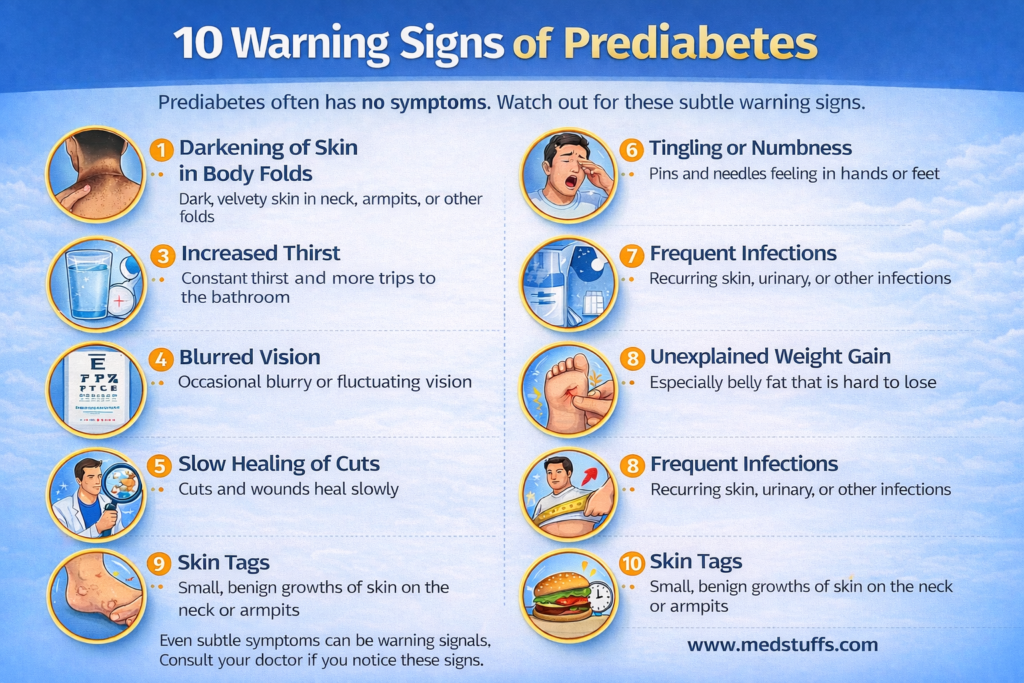
10 Warning Signs of Prediabetes
This is where it gets tricky: prediabetes often has no symptoms at all. That is why it is called a “silent” condition. However, some people do notice subtle signs — signs that are easy to dismiss or attribute to other causes. Here are 10 warning signals your body may be sending you
1. Darkening of Skin in Body Folds (Acanthosis Nigricans)
One of the most visible signs of insulin resistance. If you notice dark, velvety patches of skin on the back of your neck, armpits, groin, or inner thighs — this is called acanthosis nigricans. It is caused by excess insulin stimulating skin cell growth. In India, this sign is extremely common and frequently ignored or mistaken for sun damage or poor hygiene.
What to look for: Thick, dark, velvety texture — often more pronounced after weight gain.
2. Increased Fatigue
When your cells cannot absorb glucose efficiently, your body is literally starved of energy — even after eating. You may find yourself exhausted after meals, struggling to stay awake in the afternoon, or feeling tired despite adequate sleep. In India, this is almost universally dismissed as stress or overwork.
3. Increased Thirst and Frequent Urination
While more common in full-blown diabetes, some people with prediabetes notice they are thirstier than usual or urinating more frequently — especially at night. This happens because the kidneys work harder to filter higher blood sugar levels.
4. Blurred Vision
Elevated blood sugar, even in the prediabetic range, can cause temporary changes in the lens of your eye due to osmotic shifts. If you notice your vision fluctuating — particularly after meals — it is worth checking your blood sugar.
5. Slow Healing of Cuts and Wounds
High blood sugar impairs blood circulation and the immune response. Small cuts, scrapes, or infections that take unusually long to heal can be an early sign of metabolic dysfunction, including prediabetes.
6. Tingling or Numbness in Hands and Feet
Persistently elevated blood sugar can begin to damage small nerve fibres — a condition called peripheral neuropathy. You may notice a tingling, pins-and-needles sensation, or mild numbness in your fingers or toes. This sign, when present in prediabetes, is a warning that damage is already beginning.
7. Frequent Infections
Do you keep getting skin infections, urinary tract infections, or fungal infections that recur? High blood sugar creates an environment that bacteria and fungi thrive in, weakening your immune defence.
8. Unexplained Weight Gain Around the Belly
Central obesity — fat stored specifically around the abdomen — is both a cause and a consequence of insulin resistance. If your waistline is growing even without major dietary changes, insulin resistance may be at play.
9. Intense Hunger Shortly After Eating
This is called reactive hypoglycaemia. When insulin spikes sharply after a high-carbohydrate meal, it can cause blood sugar to drop quickly — leaving you hungry again within 1 to 2 hours of eating. This cycle of sugar spike and crash is a classic sign of impaired glucose metabolism.
10. Skin Tags
Small, soft, benign growths of skin that appear on the neck, armpits, or eyelids are called acrochordons or skin tags. Research has found a strong association between multiple skin tags and insulin resistance. If you have several new skin tags appearing, it may be worth a blood sugar check.
Important: No Symptoms Does Not Mean No Problem Most people with prediabetes have NONE of these symptoms. The absence of symptoms is not reassurance. If you have 2 or more risk factors listed above, get a blood sugar test done regardless of how you feel.
How is Prediabetes Diagnosed? The 3 Blood Tests
Prediabetes is diagnosed through simple blood tests. Here are the three standard tests and what the values mean:
| Test | Normal | Prediabetes | Diabetes |
| Fasting Blood Sugar (FBS) | 70–99 mg/dL | 100–125 mg/dL | ≥ 126 mg/dL |
| Post-Meal (2hr OGTT) | < 140 mg/dL | 140–199 mg/dL | ≥200 mg/dL |
| HbA1c (3-month average) | < 5.7% | 5.7%–6.4% | ≥6.5% |
FBS (fasting blood sugar) is the most commonly done test in India. You fast for 8 hours overnight and give a blood sample in the morning. It is inexpensive, widely available, and is a good first screening test.
HbA1c reflects your average blood sugar over the past 3 months and is more reliable as it is not affected by a single meal. It is recommended by the American Diabetes Association as a primary screening tool.
| When Should Indians Get Tested? The ADA recommends screening from age 35 for all adults. However, given the higher risk profile of Indians, many experts recommend starting at age 25–30 if you have even one risk factor (family history, PCOS, overweight, sedentary lifestyle). Once normal, retest every 3 years. If borderline, retest every 1–2 years. |
Can Prediabetes Be Reversed? Yes — Here Is How
This is the most important section of this article. Prediabetes is not a death sentence — it is an opportunity. Multiple large clinical trials have shown that lifestyle interventions can reduce progression to type 2 diabetes by 40 to 70 percent. The Indian Diabetes Prevention Programme (IDPP) showed that lifestyle changes were as effective as metformin in preventing diabetes progression in Indian adults with prediabetes.
1. Lose 5–7% of Your Body Weight
Even a modest weight loss has dramatic effects. If you weigh 70 kg and lose just 3.5 to 5 kg, your insulin sensitivity improves significantly. You do not need to become thin — just lighter.
2. Get 150 Minutes of Exercise Per Week
That is just 30 minutes of brisk walking, 5 days a week. Exercise increases your muscles’ ability to absorb glucose without needing insulin — directly counteracting insulin resistance. For busy Indians: even 3 walks of 10 minutes each count.
3. Overhaul Your Diet — Specifically for Indian Eating Habits
- Replace white rice and maida (refined flour) with millets, whole wheat, brown rice, or daliya
- Eat dal, sprouts, eggs, paneer, or fish at every meal — protein slows glucose absorption
- Add a salad or sabzi before your main meal — fibre blunts the sugar spike
- Avoid fruit juices, packaged ‘health’ drinks, flavoured yoghurts, and biscuits.
- Choose low-glycaemic-index foods: oats, rajma, chana, barley
- Reduce portion size of carbohydrates — eat carbs on a quarter of your plate, not half
4. Manage Stress
Chronic stress raises cortisol, which raises blood sugar. Prediabetes management without stress management often fails. Even 10 minutes of deep breathing or meditation daily has measurable effects on insulin sensitivity.
5. Sleep 7–8 Hours Per Night
Poor sleep directly worsens insulin resistance. Studies show that even one week of insufficient sleep significantly impairs glucose metabolism. This is a particularly important and under-discussed intervention in India, where late nights are common.
What About Medication?
Metformin is sometimes prescribed for high-risk individuals with prediabetes — particularly those with a high BMI, a history of gestational diabetes, or very high fasting glucose (close to 125 mg/dL). However, guidelines universally agree that lifestyle changes should be the first-line treatment, and medication alone without lifestyle change is far less effective. Always consult your doctor before starting any medication.
What Happens If Prediabetes is Left Untreated?
Without intervention, prediabetes progresses to type 2 diabetes at a rate of 5 to 10 percent per year. Over time, this means damage to:
- Eyes (diabetic retinopathy — leading cause of preventable blindness in India)
- Kidneys (diabetic nephropathy — leading to dialysis)
- Nerves (peripheral neuropathy — pain, tingling, and loss of feeling in feet)
- Heart (dramatically increased risk of heart attack and stroke)
- Brain (emerging research links prediabetes to early cognitive decline and dementia)
The cruel irony is that by the time type 2 diabetes is diagnosed, nearly 50% of patients already have at least one chronic complication. The damage had begun during the prediabetes stage — silently, for years.
Frequently Asked Questions (FAQ)
Is prediabetes the same as “borderline diabetes”?
Yes — ‘borderline diabetes’ is simply an informal term for prediabetes. Both refer to blood sugar levels above normal but below the diabetic threshold.
Can thin people get prediabetes?
Absolutely. In India especially, a significant proportion of people with insulin resistance and prediabetes have a normal or low BMI. Visceral fat (fat around the organs, not just under the skin) is the real culprit — and it can be present even in lean individuals. This is sometimes called TOFI: thin outside, fat inside.
If I lose weight, does prediabetes go away permanently?
For many people, yes. Sustained lifestyle changes can return blood sugar to normal — and keep it there. However, if you regain weight or return to sedentary habits, blood sugar can rise again. Think of it as management rather than cure.
My parents have diabetes. Does that mean I will get it too?
Having a first-degree relative with type 2 diabetes increases your risk significantly — but it is not destiny. Your lifestyle choices have a larger influence on your outcome than your genes, according to current research. Knowing your family history is a reason to be more vigilant, not fatalistic.
Can children and teenagers get prediabetes?
Yes. With rising obesity and sedentary lifestyles among Indian adolescents, prediabetes is increasingly being detected in teenagers, particularly those who are overweight. Studies show prediabetes/diabetes prevalence of 8–12% among Indian adolescents.
•Key Takeaways •
Prediabetes is reversible — but only if you act early.• It usually has NO symptoms. Get tested if you have any risk factors. • The 3 diagnostic tests are: Fasting Blood Sugar, HbA1c, and OGTT. • The most effective treatment is lifestyle change: weight loss, exercise, and a low-glycaemic diet. • Indians are at higher risk than most populations — even at lower BMI. • If left untreated, prediabetes silently causes organ damage before diabetes is even diagnosed.
About the author
Mohammad Junaid Rain is an MBBS student at GMC Nagpur, passionate about making evidence-based medical information accessible to every Indian. “medstuffs.com” is dedicated to clear, doctor-written disease education for patients and caregivers.
Disclaimer: This article is for educational purposes only and does not substitute professional medical advice. Please consult your doctor for diagnosis and treatment.
6 thoughts on “What is Prediabetes? 10 Warning Signs You Must Not Ignore”