
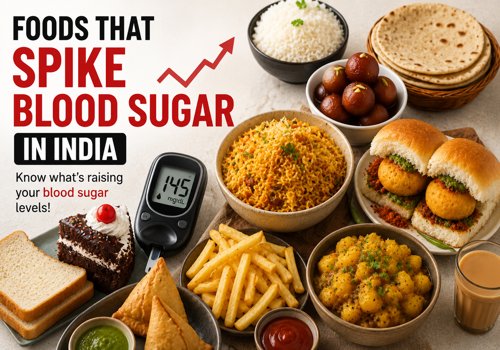
The foods that spike blood sugar in India the fastest are not the obvious ones. It is not the gulab jamun at a wedding. It is the poha you eat every morning, the second helping of rice at lunch, and the “healthy” glass of fresh juice before school.
Every app assumes you eat sliced bread and canned soup. Your kitchen makes roti, dal and khichdi and no app in the world has a carb count for the way your mother cooks it.
The problem is not Indian food. The problem is not knowing how much carbohydrate is on your plate. For a Type 1 diabetic, that gap between eating and knowing is where blood sugar control is lost, three times a day, every single day.
This guide gives you one practical method- no app, no scale, no dietitian at the table to estimate carbs in any Indian meal accurately enough to match your insulin dose every time.
Why Indians Have More Dangerous Blood Sugar Spikes Than Most Countries
Traditional Indian thalis are naturally carbohydrate-heavy, frequently driving a massive consumption footprint across the population. This carb-dominant lifestyle, combined with industrial roller milling, creates a perfect metabolic storm for severe blood sugar spikes:
- The Maida Landmine: Refined flour (maida) packs a shocking glycemic index of 85 to 89, outspiking pure table sugar rated at 65. Roller milling strips away the fiber-rich bran and germ layers, leaving a microscopic endosperm powder. With no fiber brakes, digestive enzymes convert this starch into sugar in minutes, instantly flooding your bloodstream.
- The Fine-Milling Trap: Even whole grains can trick your metabolism if processed incorrectly. When wheat or millets are roller-milled into an ultra-fine powder for chapatis, the processing drastically slashes particle size, raising the glycemic index to match refined wheat.
- The White Rice Tsunami: White rice features a high glycemic index of 73. Digesting at rapid speeds, heavy reliance on refined cereal staples removes natural digestive nets, flooding insulin pathways and elevating diabetes risks.
- The Protein Deficit: Modern plates frequently lack adequate protein and fiber, which normally slow down stomach emptying and trap gut sugars. Eating carbohydrates “naked” without protein removes your body’s metabolic speed limits. Fortunately, the “Protein Pairing Rule” proves that simply adding a side of dal or curd can slash your post-meal blood sugar spike by up to 40%!
By swapping ultra-fine powders for coarse, traditional grains, you take back control of your metabolic highway.
White Rice, Maida & Refined Grains: The Three Biggest Spike Triggers in Indian Kitchens
White rice, maida, and refined grains dominate Indian thalis, but clinically, they act like an uncontrolled accelerator pedal for your blood sugar. According to the research, these three staples trigger rapid glucose surges due to their high glycemic index, fine texture, and complete lack of fiber.
- Maida (Refined Wheat Flour): Maida carries a shocking Glycemic Index of 85 to 89—far worse than table sugar at 65. Industrial milling strips away the protective, fiber-rich bran and nutrient-dense germ, leaving only pure starch. Its ultra-fine, baby-powder texture lets digestive enzymes process it instantly. ICMR data warns that eating maida-based foods five or more times weekly increases your Type 2 diabetes risk by 3.2 times.
- White Rice: A daily staple for 61 percent of Indians, polished white rice packs a high Glycemic Index of 73. Because its outer fiber jacket is polished away, it digests rapidly and triggers immediate insulin spikes, driving 23 percent of South Asia’s entire diabetes burden.
- The Refined Grain Crash: Refined starches like white rice, maida, and rava account for nearly 30 percent of our daily energy. Without fiber, these fast carbs trigger an immediate energy high followed by a rapid crash, leaving you exhausted and craving sugar. Over time, this cycle causes stubborn belly fat and insulin resistance.
The Fix: You do not have to give up your favorite foods. Simply apply the Protein Pairing Rule—like adding a side of dal or curd—to slow down digestion and safely blunt blood sugar spikes by up to 40 percent!
The Hidden Blood Sugar Bombs: Poha, Sabudana, Packaged Namkeen & Fruit Juice
While white wheat flour is a well-known risk, your kitchen hides innocent-looking items often mistaken for light, healthy options. According to the research, these hidden blood sugar bombs severely destabilize your glucose levels because they completely lack native fiber brakes.
- Fruit Juice: Juicing completely strips away a fruit’s protective fiber net. Without fiber to slow down digestion, even 100 percent natural juice behaves exactly like liquid sugar, flooding your bloodstream instantly. Long-term clinical studies link regular juice consumption directly to rising, uncontrolled HbA1c levels. The Fix: Swap juice for whole, fresh fruits.
- Packaged Namkeen: Because savory snacks taste salty rather than sweet, we tend to ignore their glycemic impact. However, packaged bhujia and sev are ultra-processed refined flour traps deep-fried in poor-quality fats. This toxic combination fuels silent tissue inflammation and directly drives visceral belly fat.
- Poha (Rice Flakes): Loved as a light breakfast, poha is actually flattened polished white rice. The flattening process dramatically increases its physical surface area, allowing digestive enzymes to rapidly tear the starches down into sugar. High white rice intake quietly drives 23 percent of South Asia’s entire diabetes burden. The Fix: Never eat it naked.
- Sabudana (Tapioca Pearls): Popular during religious fasting, sabudana is virtually 100 percent pure starch with almost zero protein or dietary fiber. Consuming it alone forces a massive glucose surge, followed by an immediate, exhausting energy crash.
How to Defuse the Bombs: Never eat refined carbohydrates in isolation. Always heavily mix your poha or sabudana with fiber-rich green vegetables and robust proteins like peanuts, lentils, or eggs to safely slow stomach emptying and flatten your blood sugar curve.
Potatoes in Every Form: Why Aloo, Samosa & Vada Pav Are T1D’s Worst Enemy
Staring at a golden samosa or vada pav is a massive challenge for anyone managing Type 1 Diabetes. These beloved snacks create a perfect metabolic storm, combining fast-acting starches with heavy frying fats that make your mealtime insulin timing incredibly unpredictable.
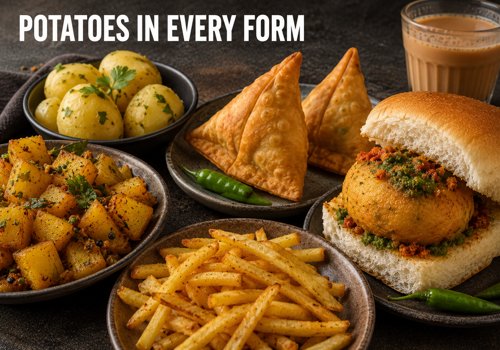
Potatoes are pure starch with a high Glycemic Index of 70 or more, meaning they convert to glucose almost instantly. When wrapped inside an ultra-fine maida crust or bread roll (GI 85 to 89), it forms a double-layered carbohydrate bomb completely stripped of fiber.
The true trap for Type 1 Diabetes is the heavy frying fat. Fat delays stomach emptying, temporarily masking the immediate spike. If you inject a standard mealtime insulin dose, your insulin will peak before the food fully digests, causing a dangerous initial low crash. Hours later, when the massive load of potato starch finally hits your bloodstream, you face a stubborn, sky-high spike. Managing these split surges requires complex split-dose insulin strategies, making regular consumption a metabolic nightmare.
The Swap Guide: Low-GI Indian Foods to Replace Every High-GI Offender
Reengineering your kitchen doesn’t mean giving up your favorite cultural flavors; it’s simply about upgrading how your food behaves inside your body. By swapping rapid-digesting “fast carbs” for fiber-rich, protein-heavy alternatives, you can enjoy classic Indian meals with complete blood sugar confidence.
Here are the most powerful upgrades for your thali:
- The Maida Swap: Refined white flour (GI 85-89) acts like a blood sugar grenade. Swap it for protein-dense Besan (GI 35), Bajra (GI 54), or Jowar (GI 60) for your daily home-cooked rotis. Trade bakery biscuits for crunchy jowar-oats cookies.
- The White Rice Swap: Polished white rice (GI 73) strips away the grain’s protective bran. Switch to whole-grain brown rice, quinoa, or low-GI barley. Better yet, use a 3:1 cereal-to-pulse ratio to naturally blunt the glycemic load.
- The Aloo Swap: High-starch potatoes rapidly flood your system with glucose. Swap them for Sweet Potatoes or nutrient-dense, fiber-rich green sabzis like bhindi, cabbage, and palak.
- The Juice Swap: Juicing strips away the fruit’s natural fiber net. Always choose whole fruits like guava or pear over processed liquid sugar juices.
- The Namkeen Swap: Deep-fried savory snacks drive visceral belly fat. Replace processed bhujia and sev with roasted chana, makhana, or sprouts chaat.
Universal Hack: Always use the Protein Pairing Rule. Never eat carbohydrates bare; pairing your main carb source with dal, paneer, or curd slows down digestion and can safely cut your post-meal blood sugar spike by up to 40%!
How to Eat Your Favourite Indian Foods Without the Blood Sugar Spike
You don’t need to banish your favorite traditional comfort foods to protect your health. Managing diabetes successfully isn’t about strict deprivation; it’s about using smart kitchen adjustments to alter how food behaves inside your body.
- The “Dress Your Carbs” Rule: Never eat carbohydrates completely bare. Naked carbs are like a speeding motorcycle tearing down your bloodstream. Pairing your roti or rice with protein (dal, paneer, eggs) or healthy fats slows stomach emptying, dropping your post-meal blood sugar spike by up to 40%.
- The 3:1 Thali Metric: Embrace the time-tested 3:1 cereal-to-pulse ratio found in a classic khichdi. Blending grains with legumes builds a complete, high-quality protein block that naturally forces down the overall Glycemic Index of the entire meal.
- Metabolic Pre-Cooking Secrets: Rely heavily on traditional fermentation and sprouting. Fermenting your dosa or idli batters acts like an invisible pre-digestion step, cutting the food’s GI by 15% to 20%.
- Deploy a Vegetable Fiber Net: low-GI vegetables like lauki, zucchini, or spinach directly into your paratha dough or cheela batters. This fiber weaves a protective net in your digestive tract, trapping sugars and delaying their release.
- 10-Minute Damage Control: If you indulge in festive sweets at lunch, immediately activate your muscles to act as a sugar sponge. A casual 10-minute walk paired with a handful of walnuts can lower your total blood sugar impact by 25%.
Reference:
https://www.nature.com/articles/s41591-025-03949-4
https://pmc.ncbi.nlm.nih.gov/articles/PMC12477350/
https://medlineplus.gov/ency/patientinstructions/000941.htm
https://pubmed.ncbi.nlm.nih.gov/21870917
https://nin.res.in/dietaryguidelines/pdfjs/locale/DGI_2024.pdf
https://pubmed.ncbi.nlm.nih.gov/40256802
https://pmc.ncbi.nlm.nih.gov/articles/PMC7551673
https://www.cdc.gov/diabetes/healthy-eating/carb-counting-manage-blood-sugar.html
https://diabetesjournals.org/care/article/48/Supplement_1/S86/157553
About the author
It’s me Mohammad Junaid Rain an MBBS student at GMC Nagpur, passionate about making evidence-based medical information accessible to every Indian. “medstuffs.com” is dedicated to clear, disease education for patients and caregivers.
Disclaimer: This article is for educational purposes only and does not substitute professional medical advice. Please consult your doctor for diagnosis and treatment.