
Overview
Today we are going to understand what is insulin resistance. You know… most people think diabetes starts when blood sugar becomes high.
But here’s the truth:
The real problem often starts years before that.
It’s called insulin resistance — a silent condition where your body is already struggling, even when your blood sugar looks normal.
Understanding this early stage is the key to preventing type 2 diabetes, heart disease, and metabolic disorders.
Let’s break it down in the simplest way possible.
What is insulin resistance ?
Think of insulin as a key and your body’s cells as doors.
- When you eat, glucose (sugar) enters your blood, and it is supplied to your muscles, your brain, your bones, liver and other organs.
- Insulin acts like a key that opens the cell doors.
- Once the door opens, glucose enters the cell and is used for energy. In the presence of Insulin, cells of these tissues or organs take up the glucose and perform their work.
In insulin resistance, the “locks” on these doors stop working properly.
So even though insulin is present, the doors don’t open efficiently.
As a result:
- Glucose stays in the blood
- The body produces more insulin to compensate
This condition is called insulin resistance.
WHAT ACTUALLY HAPPENS INSIDE YOUR BODY ?
At a physiological level, insulin resistance mainly affects three key tissues:
Muscle (where most glucose should go)
Normally, muscles absorb a large amount of glucose after a meal.
But in insulin resistance:
- Muscle cells don’t respond properly to insulin
- Less glucose enters the cells
- Glucose remains in the bloodstream
This is one of the earliest changes in insulin resistance.
Liver (the “glucose factory”)
The liver normally produces glucose during fasting and stops when insulin is present.
But in insulin resistance:
- The liver keeps producing glucose even when it’s not needed
- It ignores insulin’s signal to stop
So now you have glucose coming from:
- food and
- the liver itself
Fat Tissue (worsens the problem)
Fat cells, especially around the abdomen, release free fatty acids.
These:
- Interfere with insulin signaling
- Make muscle and liver even more resistant
This creates a vicious cycle.
The Body’s Compensation Mechanism
Since glucose is not entering cells properly, the body tries to fix the problem:
- The pancreas produces more insulin than normal
- This condition is called hyperinsulinemia (increased level of insulin in blood than normal).
At this stage:
- Blood sugar may still be normal
- But insulin levels are abnormally high
Why This Stage Is Dangerous
Because routine blood tests often check only glucose but;
Insulin resistance can remain hidden for years
Damage is already happening silently
This is why early understanding is critical.
Stages of insulin resistance
Insulin resistance is not a single event — it’s a progressive process:
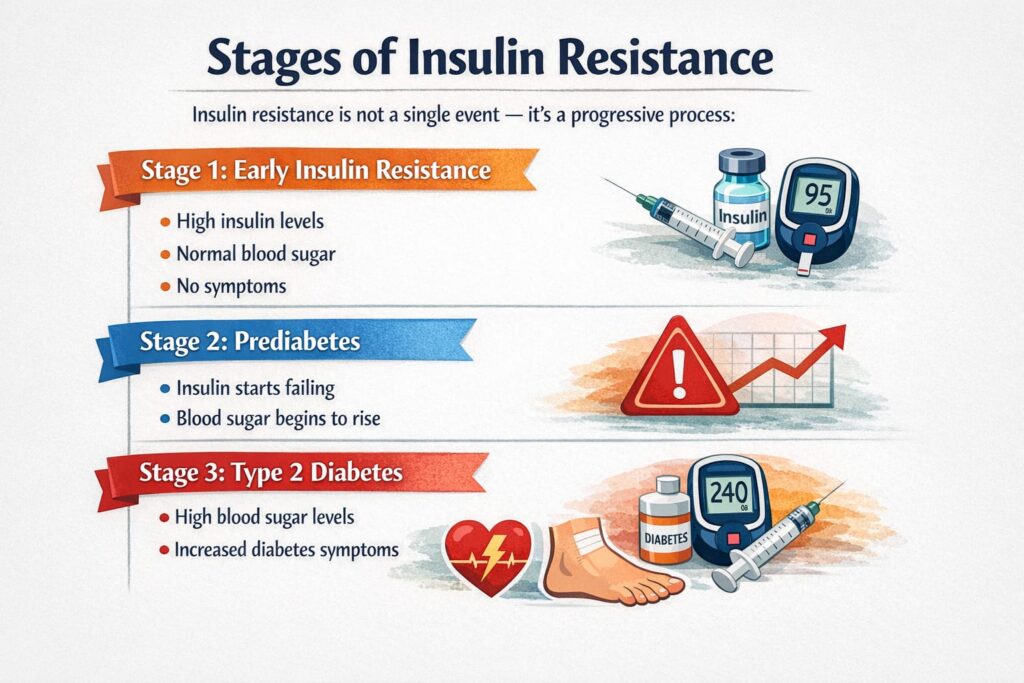
Stage 1: Early Insulin Resistance
- High insulin levels
- Normal blood sugar
- No symptoms
Stage 2: Prediabetes
- Insulin starts failing
- Blood sugar begins to rise
Stage 3: Type 2 Diabetes
- Pancreas can no longer keep up
- Blood sugar becomes persistently high
👉 This entire process can take years.
That’s why early detection is very critical to prevent from diabetes and prediabetes.
Why Insulin Resistance Is Dangerous
The biggest problem is: You usually don’t feel it. You cant just feel it, you have to go for the diagnostic test.
Even without symptoms, insulin resistance increases the risk of:
- Type 2 diabetes
- Heart disease
- Fatty liver disease
- Hormonal disorders
Feeling normal does not mean your body is healthy.
Till here you better understand, what is insulin resistance. Now lets understand what are the causes in the next section.
Causes of Insulin Resistance
Not all causes are equal. The most important ones are listed as follows:
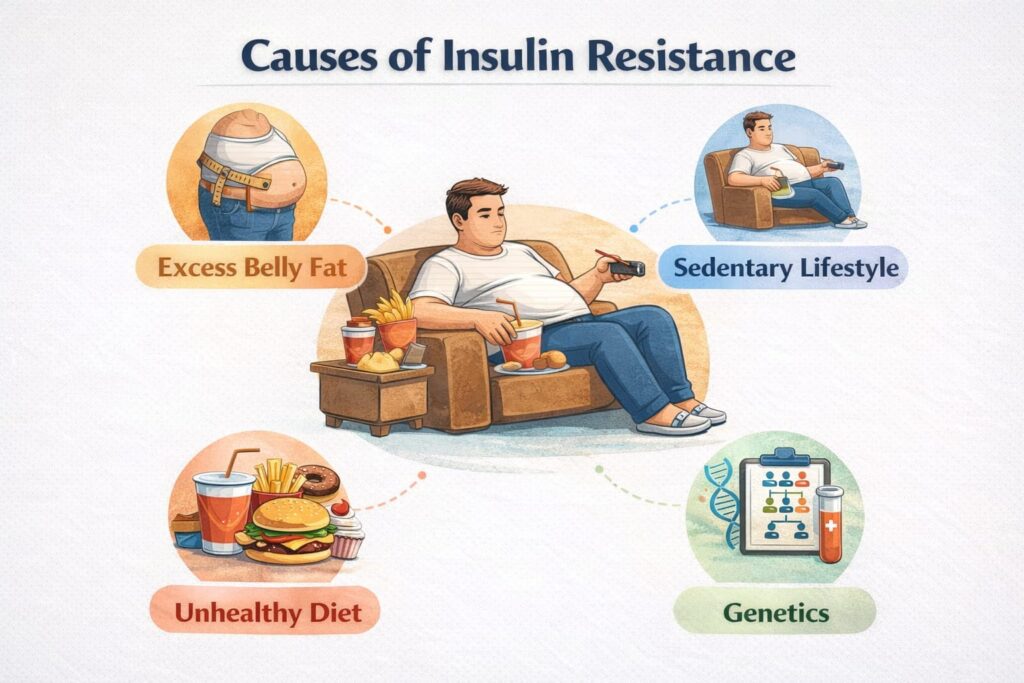
1. Excess Belly Fat (Most Important)
Visceral fat releases substances that interfere with insulin. This leads to decrease effect of insulin in the body.
2. Sedentary Lifestyle
Lack of physical activity reduces glucose usage. Reduce in glucose uptake leads to the high blood glucose level in the blood.
3. Unhealthy Diet
Frequent high sugar intake increases insulin demand. This makes the pancreas to secrete more insulin hormone.
4. Genetics
Family history increases susceptibility. If in your family someone already have diabetes, prediabetes or insulin resistance, then you can have this condition also.
Early Signs of Insulin Resistance
Although insulin resistance is often silent, some early signs can be seen which include:
- Increased belly fat
- Fatigue after meals
- Sugar cravings
- Difficulty in losing weight
These signs are often ignored but can indicate early insulin resistance.
At this point if you feel you have insulin resistance, then for the confirmation go to your doctor and tell him about your current condition.
What Should You Do If You Have Insulin Resistance?
So as you understand what is insulin resistance and now if you think you may have insulin resistance, then goal is not just to lower blood sugar—but to improve how your body responds to insulin.
Here’s a step-by-step approach:
1. Confirm It With Proper Tests
Do not rely only on symptoms.
Start with basic blood tests:
- Fasting blood glucose
- HbA1c
- Fasting insulin (often overlooked but very important)
If available, a HOMA-IR test can give a clearer picture.
Remember: You can have insulin resistance even when glucose is normal.
2. Identify Your Stage Early
Understanding your stage helps you act at the right time:
- Normal glucose + high insulin → Early insulin resistance
- Slightly elevated glucose → Prediabetes
- High glucose → Diabetes
The earlier you identify it, the easier it is to reverse.
3. Focus on Improving Insulin Sensitivity
Instead of only avoiding sugar, focus on making your body more responsive to insulin. You can increase it by doing following stuff:
Physical Activity
Regular exercise allows muscles to absorb glucose more efficiently.
- Aim for daily physical activity.
- Include both walking and strength training, go to early morning walk, go to your gym.
Reduce Excess Body Fat
Especially fat around the abdomen.
- Even small weight loss can significantly improve insulin response
Improve Diet Quality
You have be conscious about what you are eating. Avoid diet of high glycemic index like wheat, rice, refined sugar etc.
Focus on:
- Whole, unprocessed foods
- Fiber-rich meals
- Balanced protein intake
Limit:
- Refined carbohydrates
- Sugary and ultra-processed foods
Sleep and Stress Management
- Poor sleep reduces insulin sensitivity
- Chronic stress increases hormones that raise blood sugar
4. Do Not Wait for Symptoms
Insulin resistance often develops silently.
By the time symptoms appear, the condition may have already progressed.
Acting early is the most effective strategy to prevent further complications like type 2 diabetes, prediabetes
5. Seek Medical Guidance When Needed
Consult a doctor if:
- You have risk factors like obesity or family history
- Your reports are abnormal
- You are diagnosed with prediabetes or related conditions
6. Understand the Role of Medication
Not everyone needs medication.
- Early stages → lifestyle changes are often enough
- In some cases, doctors may prescribe medications like Metformin
However, medication supports treatment—it does not replace lifestyle changes.
As a medical student i have seen many people who work on their diet plan, sleep-wake routine, early morning walk, gym and they are enjoying their normal life without any medication.
So, i will suggest you. Don’t wait for symptoms to come, go and work on your lifestyle. If reports are abnormal then go to your doctor and start your medications. Do not stop medicines without taking advice from the doctor.
My key Takeaway for you:
Insulin resistance can often be reversed in its early stages.
But the window for prevention becomes smaller as the condition progresses.
Taking action early can prevent long-term complications like type 2 diabetes.
Conclusion
Insulin resistance is not just a medical term — it is the starting point of many chronic diseases.
By the time blood sugar rises, the condition has often been present for years.
Understanding insulin resistance early gives you the opportunity to prevent serious health problems
Frequently asked question (FAQ)
What are insulin resistance symptoms in females?
Common symptoms of insulin resistance in females include weight gain (especially around the abdomen), irregular menstrual cycles, acne, excessive hair growth (hirsutism), and darkened skin patches (acanthosis nigricans). It is often associated with hormonal conditions like Polycystic Ovary Syndrome and can affect fertility if untreated.
Can insulin resistance be reversed?
Yes, insulin resistance can often be reversed, especially in early stages. Regular exercise, weight loss (5–10%), and a high-fiber, low-sugar diet improve insulin sensitivity. Sleep and stress management also play a key role. In some cases, medications like metformin may be prescribed under medical supervision.
What is the best diet for insulin resistance?
The best diet for insulin resistance focuses on stabilizing blood sugar levels. It includes whole grains, vegetables, fruits, lean proteins, and healthy fats. Foods with a low glycemic index help prevent insulin spikes. Avoid sugary drinks, refined carbs, and ultra-processed foods to improve insulin sensitivity.
What is the treatment for insulin resistance?
Treatment involves lifestyle modification and, in some cases, medication. Key components include regular exercise, weight loss, and a balanced diet. These improve how the body responds to insulin. Doctors may prescribe medications like metformin if lifestyle changes are insufficient or if risk of diabetes is high.
What causes insulin resistance?
The primary cause of insulin resistance is excess abdominal fat, which releases inflammatory substances that disrupt insulin signaling. Other causes include physical inactivity, high sugar intake, chronic stress, and genetic factors. These lead to reduced glucose uptake and increased risk of type 2 diabetes.
What is the fastest way to improve insulin resistance?
There is no instant fix, but the fastest way to improve insulin resistance is combining daily physical activity with dietary changes. Even short-term interventions like reducing sugar intake, increasing protein and fiber, and starting regular exercise can quickly improve insulin sensitivity within weeks.
About the author
It’s me Mohammad Junaid Rain an MBBS student at GMC Nagpur, passionate about making evidence-based medical information accessible to every Indian. “medstuffs.com” is dedicated to clear, doctor-written disease education for patients and caregivers.
Disclaimer: This article is for educational purposes only and does not substitute professional medical advice. Please consult your doctor for diagnosis and treatment.
9 thoughts on “What is Insulin resistance”