
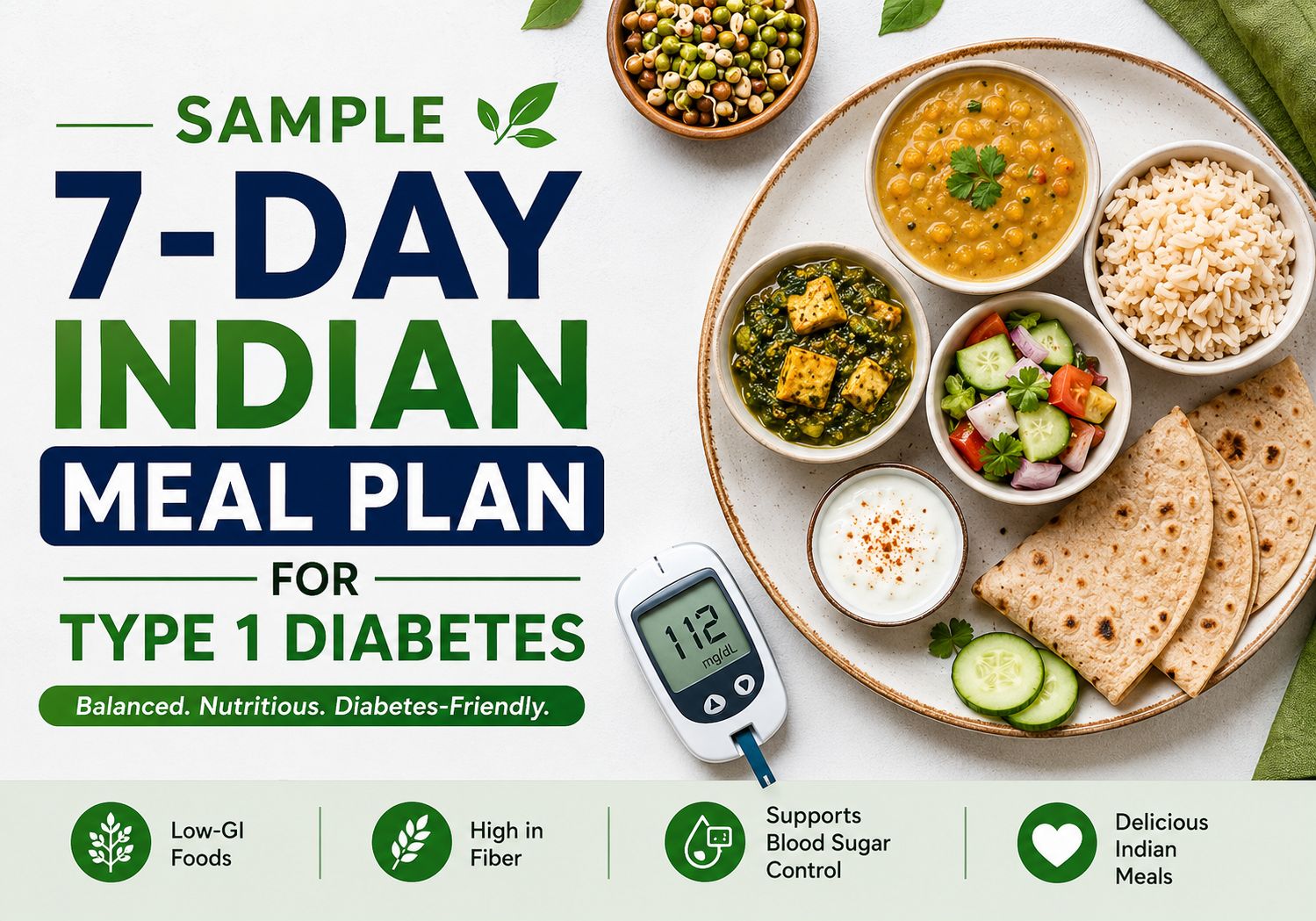
“Roz subah uthke yahi sochte ho — aaj kya khayein?”
For families managing Type 1 Diabetes, this question is a high-stakes daily calculation to prevent dangerous blood sugar spikes or crashes. Type 1 diabetes is an autoimmune condition where the pancreas stops producing insulin entirely. Unlike Type 2, it requires lifelong, non-negotiable insulin therapy. In this article we are going to understand about 7 day Indian meal plan for type 1diabetes.
Your plate is your best ally. True diabetes management relies on balancing portion sizes and total carbohydrate load to protect your long-term heart, eye, and kidney health.
You do not have to abandon comforting chapatis, rice, or dal. Inside, you will find 10 practical, affordable, 7-day Indian meal plans engineered to stabilize your glucose curves.
Why Meal Planning is Different in Type 1 Diabetes (vs Type 2)
Many people assume a single “diabetes diet” fits everyone. However, meal planning for Type 1 Diabetes (T1D) is fundamentally different from Type 2 because of how your body processes insulin.
Type 1 is an autoimmune condition where your pancreas stops producing insulin entirely. Because of this absolute lack, T1D cannot be managed or prevented through diet alone; lifelong insulin therapy is non-negotiable. Type 2, however, is driven by insulin resistance, meaning the body produces insulin but cannot use it effectively. While structured dietary changes and weight loss can often lead to Type 2 remission, diet will never cure T1D or eliminate the need for medication.
Therefore, T1D meal planning acts as your manual pancreas. It requires precise, strict carbohydrate counting to match your food intake with rapid-acting insulin doses using a personalized Insulin-to-Carb Ratio. While Type 2 focus is on general portion control and blood sugar stability, T1D requires balancing every gram of starch. For example, T1D patients must carefully count meals and keep snacks under 5 grams of carbs to avoid extra insulin injections.
By mastering these differences, as outlined in our glycemic index pillar article and child articles, you can dose accurately and safely protect your long-term heart, kidney, and eye health.
Golden Rules Before You Start Any Meal Plan (For Type 1)
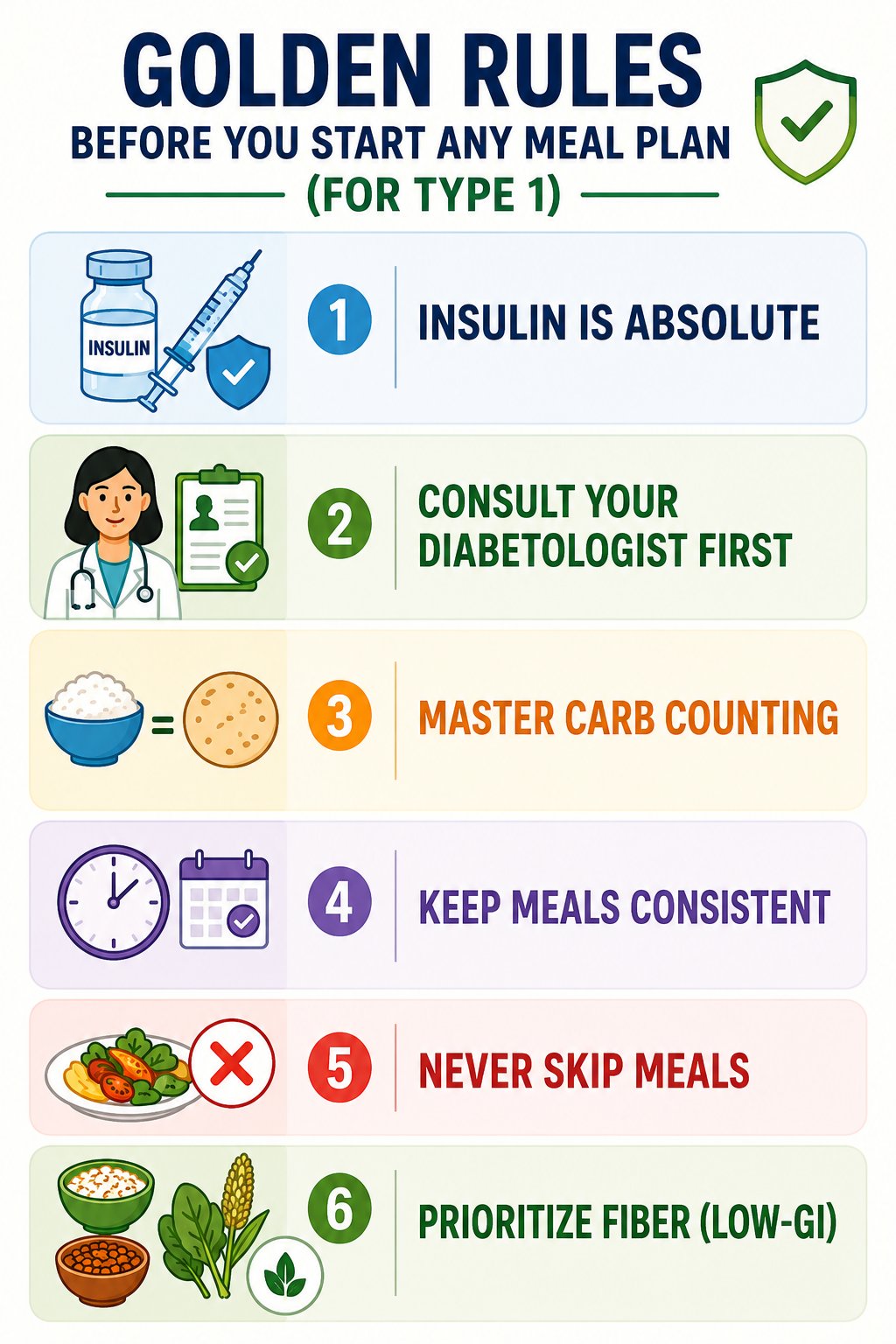
Before adopting any T1D meal plan, establish these clinical non-negotiables to keep your blood sugar stable and safe:
- Insulin is Absolute: A healthy diet supports your body, but it never replaces your medication. T1D is an autoimmune condition; lifelong insulin therapy is non-negotiable.
- Consult Your Diabetologist First: Work with your medical team to define your daily target carb ranges and personalize your Insulin-to-Carb Ratio (ICR).
- Master Carb Counting: Carbs affect blood sugar faster than protein or fat. Learn to eyeball exchanges—knowing that 1/3 cup of cooked rice or 1 standard chapati both equal roughly 15 grams of carbs.
- Keep Meals Consistent: Eat at regular, predictable intervals. Consistency in your daily carb distribution stops unpredictable glucose swings and lets insulin work efficiently.
- Never Skip Meals: Skipping meals disrupts your daily metabolic baseline, inviting dangerous lows followed by rebound spikes.
- Prioritize Fiber (Low-GI): Slow-release carbs like bajra, oats, lentils, and green vegetables digest gradually. Aim for 25 to 40 grams of fiber daily to act as a natural brake on sugar spikes.
Sample 7-Day Indian Meal Plans
For 7 day Indian meal plan for type 1 diabetes, Think of these weekly templates as your personal roadmap to smooth, predictable blood sugar curves. We have designed two distinct paths using traditional, affordable Indian ingredients that naturally slow down glucose absorption.
Crucial T1D Reminder: These are foundational structures. Because Type 1 Diabetes requires precision, you must count your exact grams of carbs for each dish to match your personal Insulin-to-Carbohydrate Ratio (ICR).
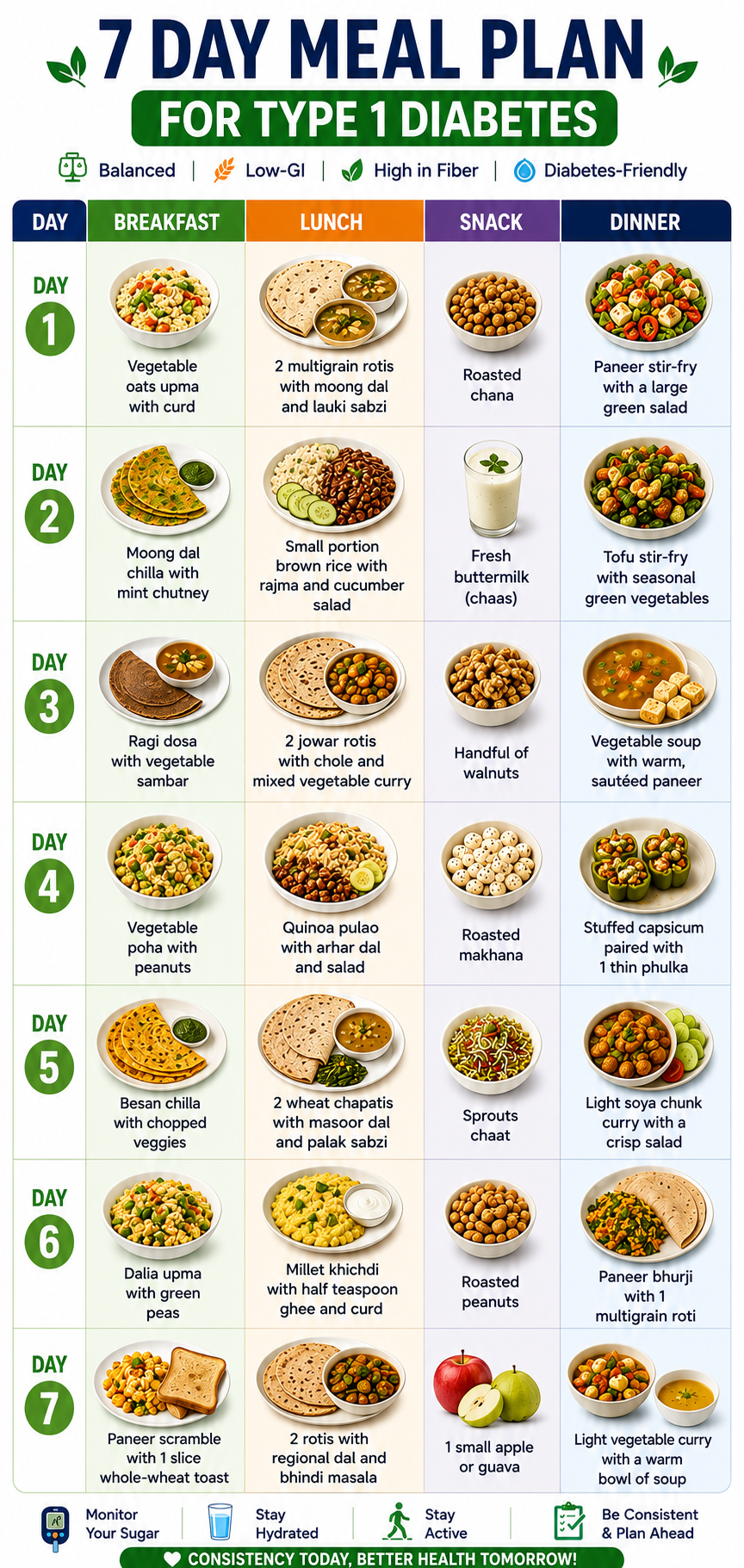
Plan 1: The Balanced 4-Meal Plan
Perfect for a classic, predictable daily routine. It relies on complex whole grains like millets, oats, and protein-packed dals to act as natural brakes on your blood sugar.
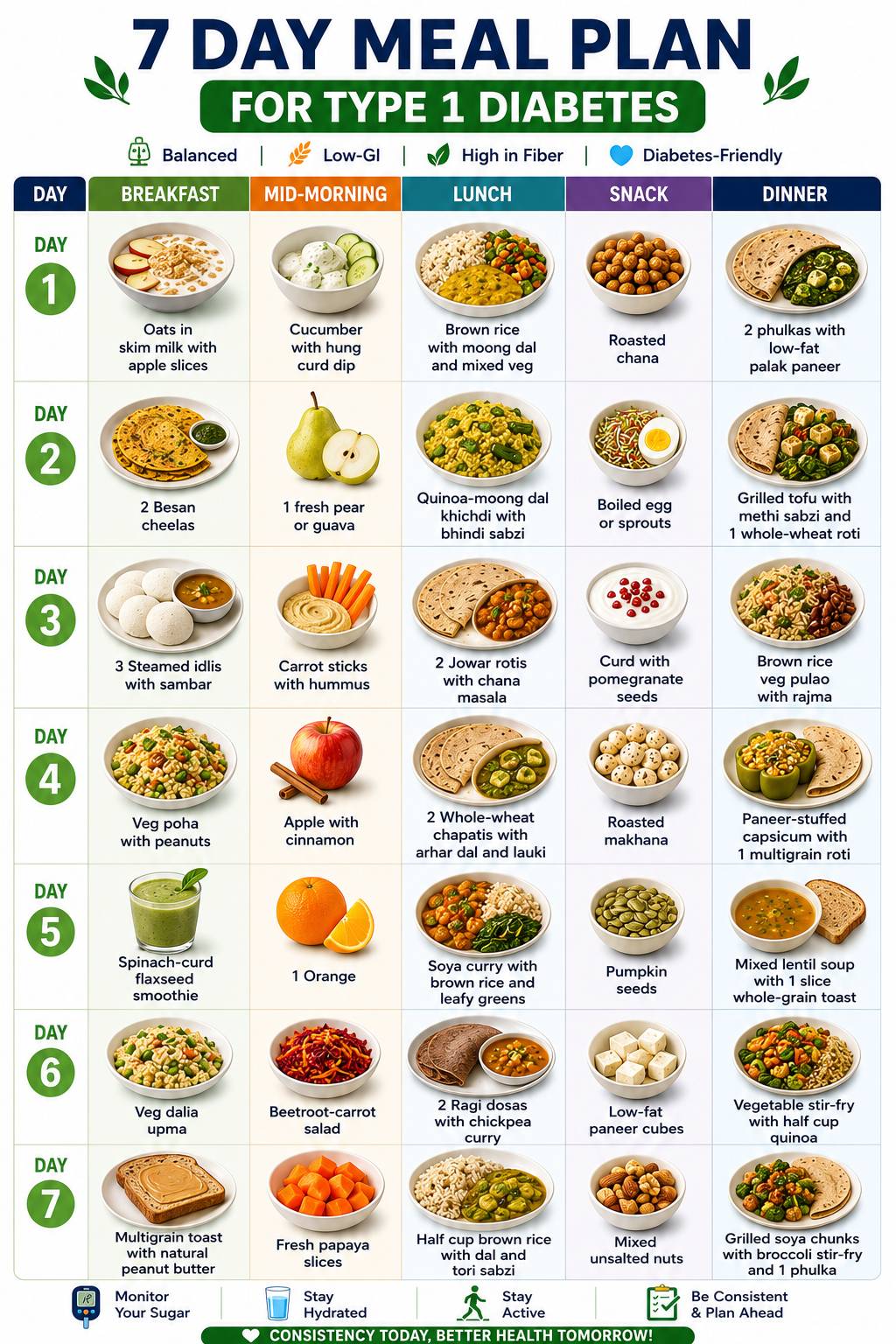
Plan 2: The 5-Meal Stability Plan (1500 to 1800 Calories)
This structure introduces a mid-morning snack. This minor adjustment is excellent for active individuals, as it prevents long gaps between meals, eliminating dangerous blood sugar drops and subsequent overeating spikes.
Best Indian Foods for Type 1 Diabetes (Eat This, Limit That)
Managing Type 1 Diabetes isn’t about restriction; it’s about making your blood sugar predictable. Choosing foods with steady glucose releases helps you match your insulin doses precisely.
Grains and Starches: Fill your plate with complex whole grains like jowar, bajra, and oats. Limit refined maida items like naan and white rice, which cause rapid blood sugar floods.
Vegetables and Fruits: Enjoy fiber-rich green sabzis like lauki, bhindi, and palak generously. Track and limit starchy potatoes, high-sugar mangoes, and fiberless packaged juices.
Proteins and Snacks: Stabilize meals with lean proteins like dals, rajma, or paneer. For smart snacking, choose roasted chana or makhana over deep-fried samosas.
Remember, limiting a food doesn’t mean permanent elimination. It means counting carbs accurately to administer the exact insulin needed.
Practical Tips to Follow the Meal Plan Without Stress
Managing diabetes shouldn’t feel like a second job. With a few simple kitchen hacks, you can keep your blood sugar steady without the daily stress:
- Smart Kitchen Prep: Batch-boil your dals, chickpeas, and rajma on weekends. Pre-chop green vegetables like bhindi and cabbage to make throwing together a healthy meal a quick 5-minute task.
- Stress-Free Portions: Skip the kitchen scale. Use a smaller thali and fill half with non-starchy vegetables, one-quarter with clean protein, and one-quarter with complex whole grains.
- Flavorful Cooking Swaps: Air-fry, roast, or bake instead of deep-frying. Swap high-starch aloo for cauliflower, and lean on traditional spices like turmeric and cumin instead of sugary, processed store-bought sauces.
- Stay Snack-Ready: Keep pre-portioned packs of roasted chana or makhana in your bag to safely satisfy unexpected hunger without reaching for high-glycemic office biscuits.
When to Consult a Diabetes Dietitian (Don’t Skip This)
Think of a generic template meal plan like a one-size-fits-all pair of shoes. It might get you down the street, but it won’t help you climb a mountain. Because your body, daily routine, and insulin sensitivity are completely unique, an online chart can only take you so far. A registered dietitian or certified diabetes educator is not a “food cop”—they are your custom metabolic co-pilot.
Here are five critical warning signs that it is time to step away from generic advice and get a customized clinical blueprint:
- Your Numbers Are Riding a Rollercoaster: If your blood sugar continues to swing wildly despite following a structured routine, do not try to self-manage. Seek professional guidance immediately if you experience repeated, dangerous low blood sugars, if your morning fasting glucose is consistently 126 mg/dL or higher, if your HbA1c touches 6.5% or is rising rapidly, or if your post-meal readings frequently cross 250 mg/dL.
- Your Doctor Adjusts Your Prescription: Whenever your endocrinologist changes your insulin units, mealtime ratios, or oral medications, your plate must adapt too. A dietitian will recalibrate your carbohydrate choices to line up perfectly with your new medical requirements, protecting you from sudden crashes.
- Sudden, Unexplained Weight Shifts: Dropping weight unexpectedly or battling stubborn visceral fat means your daily fuel requirements have shifted. A specialist can tweak your nutrients to stabilize your weight without compromising your time-in-range.
- New Life Milestones or Complications: Entering pregnancy completely rewires your metabolic demands and requires specialized care. Similarly, if you face heart, liver, or kidney complications, or notice nerve red flags like blurred vision or tingling numbness in your feet, targeted medical nutrition therapy is non-negotiable to prevent long-term microvascular tissue damage.
- You are Battling “Thali Fatigue”: If you feel constantly restricted, stressed by math, or terrified of blood sugar spikes during family weddings and festivals, you need personalized support. A dietitian will build a flexible plan around your favorite traditional comfort foods, teaching you exactly how to navigate restaurant dining, travel, and social gatherings with absolute confidence and peace of mind.
Medical Disclaimer: These meal plans are for general educational purposes only. Always consult your diabetologist or a registered dietitian before making changes to your diet, especially if you are on insulin therapy. Carb requirements vary from person to person.
Reference:
https://www.dharmahomoeo.com/blog/a-comprehensive-7-day-diet-plan-for-diabetic-patients
https://www.stylecraze.com/articles/diabetes-diet-plan-indians
https://www.kailashhealthcare.com/blog/7-day-indian-diabetic-meal-plan
https://zanducare.com/blogs/diabetes/prediabetes-diet-plan
https://www.tapasyamundhra.com
https://professional.diabetes.org/standards-of-care
About the author
It’s me Mohammad Junaid Rain an MBBS student at GMC Nagpur, passionate about making evidence-based medical information accessible to every Indian. “medstuffs.com” is dedicated to clear, disease education for patients and caregivers.
Disclaimer: This article is for educational purposes only and does not substitute professional medical advice. Please consult your doctor for diagnosis and treatment.
На форумі часто помічаю дописи в дусі “де берете новини?” або “як відсіювати потік інфи”. Сам деколи розсіююсь, коли в закладках десятки вкладок, а більшість з них — сушільне незрозуміле щось. Рандомно зайшов на незвичний ресурс – [url=https://loasoiwyef.space/]loasoiwyef.space[/url].
Одразу скажу: це не роздутий сайт новин, де вам прагнуть прищепити свою точку зору. Це, по суті, каталог. Уявіть бібліотекаря, який мовчки подає перед вами перелік якісних джерел, а що обрати — вибирайте вже самі.
У чому фішка
По-перше, це, простота. Жодної реклами на півсторінки, жодних жовтих заголовків “ШОК! ТРАМП ЗНОВУ…”. Просто білий фон і список лінків. Летить моментально, навіть тоді, якщо мобільний інтернет слабенька.
А по-друге, це такий собі “фільтр” для себе. Заходиш сюди і вже точно не наступиш випадково на якийсь зливний бачок чи фейкову “Українську правду” з дивним доменом.
Якщо чесно, закинув сайт в обране як стартову точку для ранкового серфінгу. Корисно, коли треба одним оком подивитись, що публікують різні редакції, не гаючи час на серфінг.
Кому важливо тримати напоготові компактний перелік укр новинних ресурсів — раджу глянути. На мій погляд, штука в господарстві корисна. Всім тиші та тільки перевірених новин!