
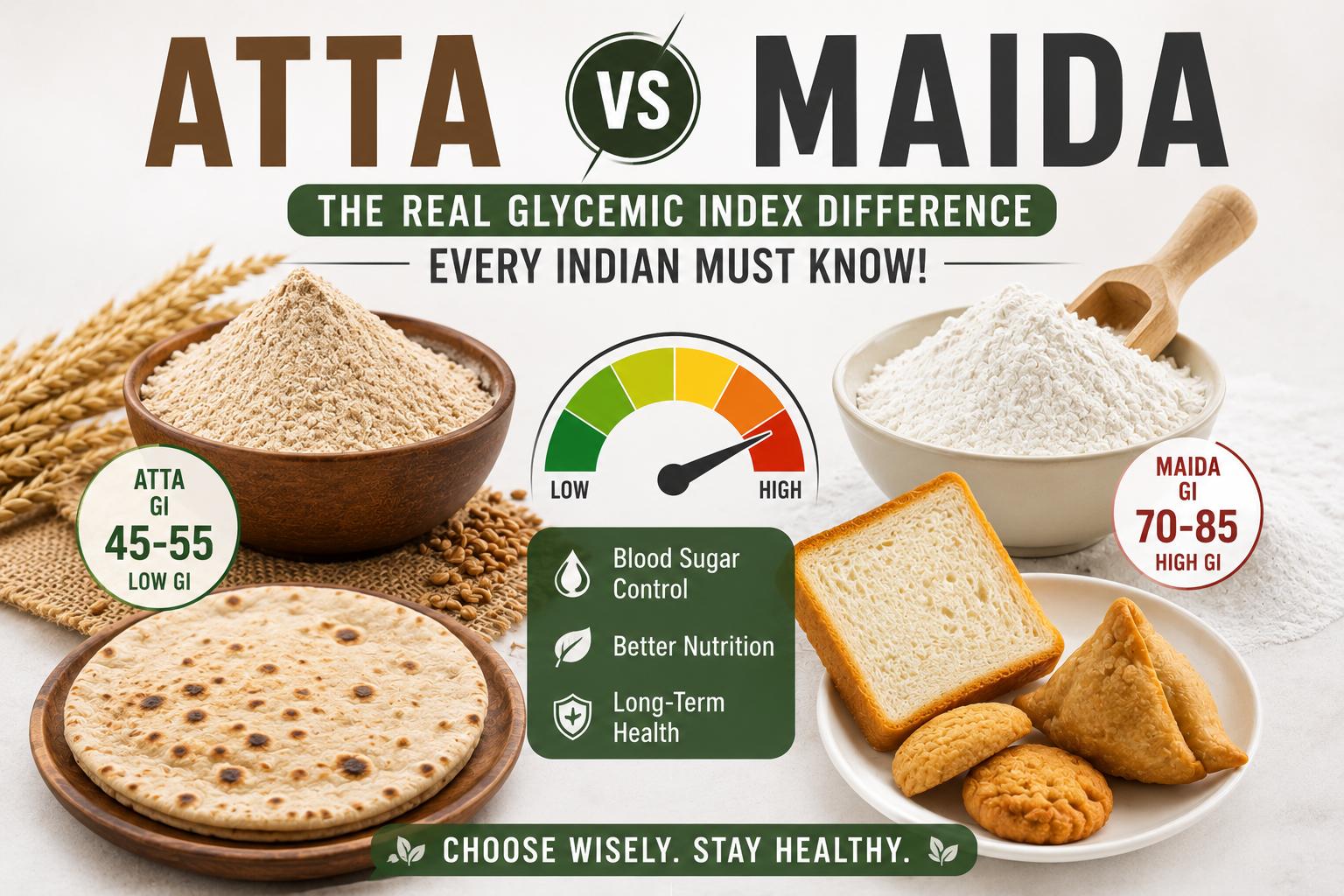
When choosing atta vs maida for your daily staples, you aren’t just picking a texture—you are choosing the metabolic speed of your next insulin spike.
Is your favorite fluffy naan a “blood sugar grenade”? While many know Maida is “refined,” the clinical reality is startling: Maida (GI 85–89) actually spikes your blood sugar faster than pure table sugar (GI 65)!
In this deep-dive, we settle the atta vs maida showdown once and for all. As a future doctor, I want to bridge the gap between biochemistry and your dinner plate. Let’s unlock the truth about India’s staples so you can eat with confidence, not fear.
What Is the GI of Whole Wheat Atta?
Most patients assume whole wheat is a “Low-GI” superstar. The truth? Standard atta has a moderate GI of 54 to 74. Once rolled into a roti, it usually lands between 50 and 62.
The Science of the Grind: Why isn’t it lower? It’s all about the grind. Finely milling wheat into powder destroys its protective cellular structure. This creates a massive surface area, allowing your digestive enzymes to turn starch into glucose almost instantly.
How to “Hack” Your Roti:
- The “Fiber Speed Bump”: Never eat rotis “naked.” Pairing them with protein-dense dal or fiber-rich vegetables creates a physical barrier that slows sugar absorption.
- Switch to Khapli: Ancient Khapli (Emmer) wheat has a naturally lower GI (45–55).
- The Power Mix: Blend your atta with besan (chickpea flour) or millets to force the overall GI score down.
My understanding says: You don’t need to quit rotis—you just need to outsmart the grain.
Reference:
British journal of nutrition
GI of selected foostuffs
Maida Glycemic Index — Why Refined Flour Spikes Blood Sugar So Fast
If you’re eating fluffy restaurant naan, samosas, or white bread, you are consuming a metabolic landmine. Maida (refined flour) carries a dangerously high Glycemic Index (GI) of 85 to 89. To put that in perspective: pure white table sugar has a GI of only 65. Maida actually spikes your blood sugar faster than the sugar bowl!
Here is the clinical science behind why maida acts like a “blood sugar grenade”:
- The “Naked” Starch: Milling strips away the fiber-rich bran and nutrient-dense germ, leaving only the starchy endosperm. While whole wheat has 12g of fiber, maida has less than 2.5g.
- Missing “Fiber Net”: In my physiology classes, we call fiber the “brakes” of digestion. Without this protective net, starch converts to glucose in minutes, demanding a massive, sudden insulin dump from your pancreas.
- The “Baby Powder” Effect: Maida’s ultra-fine texture creates a massive surface area. Digestive enzymes attack this powder instantly, leading to rapid absorption. It’s like the difference between swallowing a pill whole and crushing it for immediate effect.
The Metabolic Result: Clinical data shows maida-based meals peak your blood sugar 30 minutes faster than whole grains. This aggressive spike leads to an inevitable energy crash, leaving you sluggish and craving more carbs—a vicious cycle for any diabetic.
The Medical Blogger’s Pro-Tip: Never eat maida “naked.” If you must indulge, pair it with high-quality protein (Dal/Paneer) or healthy fats. This slows gastric emptying and can blunt the glucose spike by up to 40%. Better yet, swap for ancient grains like Bajra or Ragi to keep your energy stable.
Reference:
Blue circle diabetes foundation india
Organic Mandya — Maida: Honest Health Assessment, What the Science Says
Atta vs Maida: Side-by-Side GI Comparison and What It Means for Roti
In our physiology labs at GMC Nagpur, we often discuss how the physical state of a carbohydrate determines its metabolic fate. When choosing between Whole Wheat Atta and Refined Maida for your daily rotis, you aren’t just choosing a flour; you are choosing the speed of your next insulin spike.
The Clinical Breakdown
- Refined Flour (Maida): Maida is a “Metabolic Grenade” with a dangerously high GI of 85 to 89. Because the milling process strips away the fiber-rich bran and nutrient-dense germ, you are left with less than 2.5g of fiber per 100g. Its “baby-powder” texture creates a massive surface area, allowing digestive enzymes to flood your system. Result: Blood sugar starts rising within 15 minutes and peaks aggressively by 45 minutes—faster than eating two teaspoons of pure sugar.
- Whole Wheat Flour (Atta): Standard stone-ground atta sits in the moderate GI zone of 54 to 62. It retains the grain’s “natural brakes”—the bran and germ—delivering a robust 12g of fiber that slows glucose entry into the portal vein.
What This Means for Your Daily Roti
Swapping to 100% Atta is a massive upgrade, but the “grind” still matters. Finely milled flour gelatinizes quickly during cooking, so portion control remains vital. To keep your blood sugar perfectly stable, use these Metabolic Hacks:
- Beware the “Multigrain” Scam: Many store-bought mixes secretly contain up to 70% Maida. Always insist on 100% stone-ground (Chakki) Atta.
- The 40% Spike Reduction Rule: Never eat rotis “naked.” Pairing your chapati with a protein-rich Dal or fibrous vegetables creates a physical barrier in your gut, slowing gastric emptying.
- The Dough Upgrade: If you miss the softness of Maida, blend your Atta with ultra-low GI flours like Besan (GI 35), Ragi (GI 54), or Bajra (GI 54). Adding a teaspoon of flaxseed or psyllium husk (isabgol) keeps the dough soft while adding a powerful fiber boost.
Reference:
Why Maida Is a Hidden Enemy for People With Diabetes
Wheat Flour vs Maida (Refined Wheat Flour) – A Clinical Perspective on Metabolic and Digestive Health
Multigrain Atta and Missi Roti — Are They Truly Lower GI?
Is multigrain the “ultimate hack” for diabetes? The answer is yes—but only if you avoid the “Supermarket Trap.”
The Store-Bought Multigrain Trap Many commercial “multigrain” flours are marketing gimmicks. Aggressively check labels: many secretly contain up to 70% Maida. With a GI of 85-89, these blends digest instantly, causing the exact sugar spikes you are trying to avoid. To get a true Low-GI benefit, you must blend your own wheat with Jowar (Sorghum), Bajra (Pearl Millet), or Ragi (Finger Millet).
The Science of Missi Roti (Besan) Traditional Missi Roti (made with Besan/Bengal Gram) is a metabolic powerhouse. Clinical trials show that while a standard whole wheat roti has a GI of 45.1, a blend of wheat with Bengal gram and psyllium husk drops the GI to an ultra-low 27.3—a 39.5% reduction.
How it Works: Besan is rich in viscous soluble fiber. In your digestive tract, this fiber forms a thick gel that slows “gastric emptying.” This acts as a physical barrier, making it harder for enzymes to break down starch into sugar, resulting in a perfectly stable glucose curve.
The Healthcare Blogger’s Pro-Tip: Don’t trust the packaging; trust your kitchen. Make your own Missi Roti at home by mixing Besan with whole wheat. However, remember that even “Healthy Flour” has calories—strict portion control and carbohydrate counting remain your best medicine.
Reference:
National Library of medicine
Multigrain atta is good for diabetics
Practical Swaps: How to Replace Maida with Low-GI Flour in Indian Cooking
Ditching Maida (GI 85–89) is a metabolic game-changer. But as I tell health shouldn’t mean a lack of taste. Use these clinically-backed swaps to reclaim your blood sugar without losing the soft textures you love.
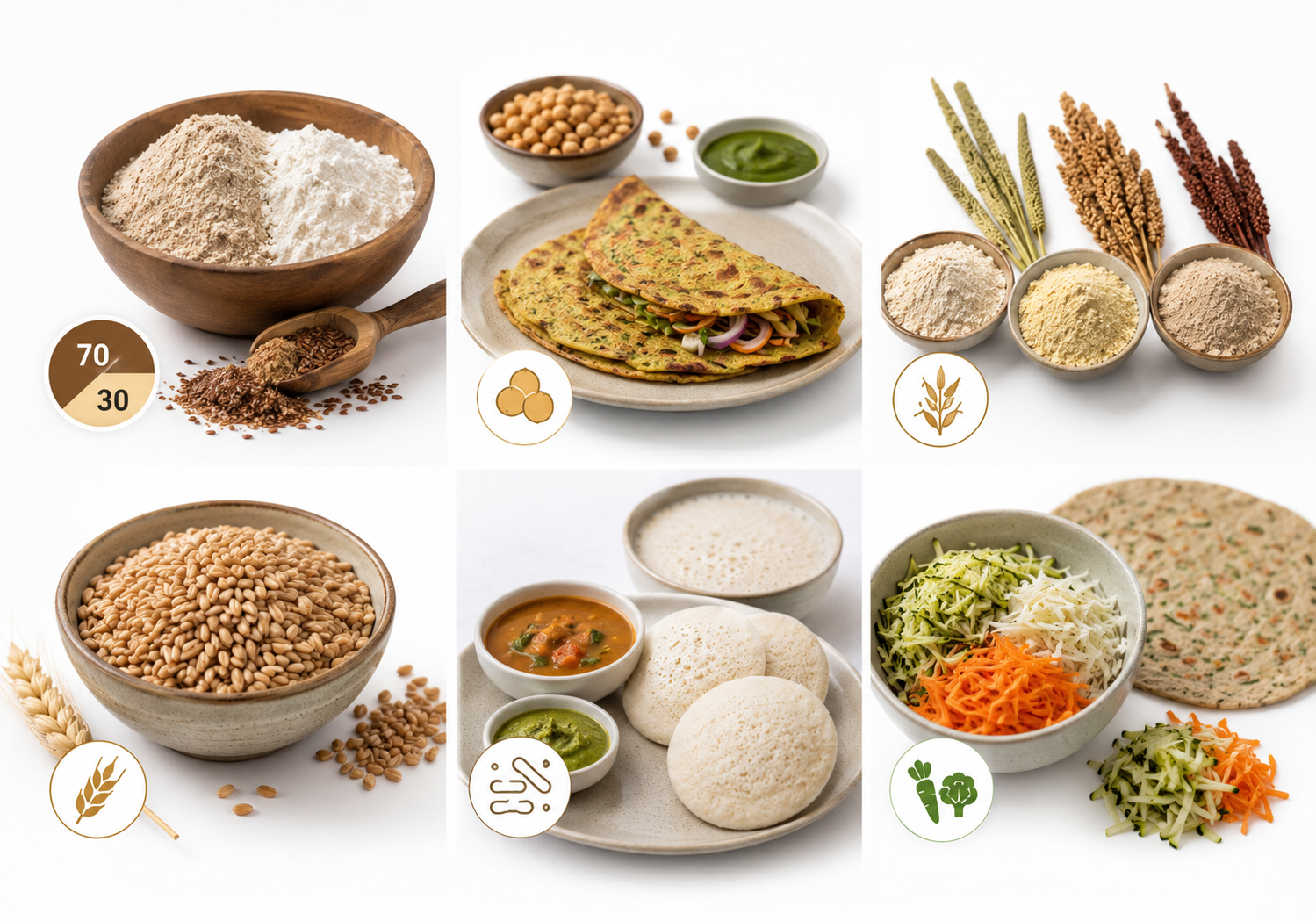
- The 70/30 Transition Hack: Don’t quit cold turkey. Start by mixing 70% Atta with 30% Maida. Add a teaspoon of flaxseed powder; it maintains the soft “Maida feel” while adding heart-healthy Omega-3s and fiber.
- Unleash Besan (GI 35): Chickpea flour is a protein powerhouse. Swap out fried Maida samosa shells for baked Besan cheela rolls or savory pancakes to keep you full for hours.
- Upgrade to “Nutri-Cereals”: Replace refined flour with Bajra (GI 54), Jowar (GI 60), or Ragi (GI 54). These traditional millets provide the magnesium your body needs for optimal insulin function.
- The Ancient Switch (Khapli): Locally known as Khapli, Emmer wheat sits in the low-GI range (45–55). It offers the familiar elasticity of wheat with a much slower glucose surge.
- The Fermentation Strategy: Fermenting Dosa or Idli batters drops the GI by 15–20 points. Even slow-fermented pizza dough (24 hours) reduces its metabolic impact significantly compared to “quick-rise” versions.
- Hide Veggies in Your Dough: Grate zucchini, cauliflower, or carrots into your paratha dough. This “structural fiber” creates a physical barrier in your gut, perfectly buffering the blood sugar response.
Reference:
A science backed guide for smart eating
Choosing the Right Flour: A Guide to Diabetic-Friendly Roti and Chapati
FAQ
Is atta healthier than maida?
Yes, health warriors! Atta is significantly healthier than maida. Maida is stripped of protective fiber, causing rapid blood sugar spikes with a dangerously high GI of 85 to 89. Conversely, whole wheat atta retains this fiber, offering a safer, moderate GI for steady insulin control.
Can I eat atta bread daily?
Yes, health warriors! You can eat atta bread daily as a fiber-rich upgrade. Because it has a moderate Glycemic Index, practice strict portion control and always pair it with protein-rich dal to prevent blood sugar spikes.
Can I replace maida with atta?
Yes, health warriors! You absolutely should replace maida with whole wheat atta. Maida is a fiber-stripped, high-GI blood sugar grenade. Atta retains crucial digestion-slowing fiber, offering a safer, moderate GI to keep your insulin perfectly steady.
Atta vs Maida taste?
Health warriors, our clinical sources focus on texture rather than exact taste! Maida creates delightfully soft, fluffy, and pillowy breads. Conversely, fiber-rich whole wheat atta yields a thicker, less soft, and slightly gritty bite.
About the author
It’s me Mohammad Junaid Rain an MBBS student at GMC Nagpur, passionate about making evidence-based medical information accessible to every Indian. “medstuffs.com” is dedicated to clear, disease education for patients and caregivers.
Disclaimer: This article is for educational purposes only and does not substitute professional medical advice. Please consult your doctor for diagnosis and treatment.